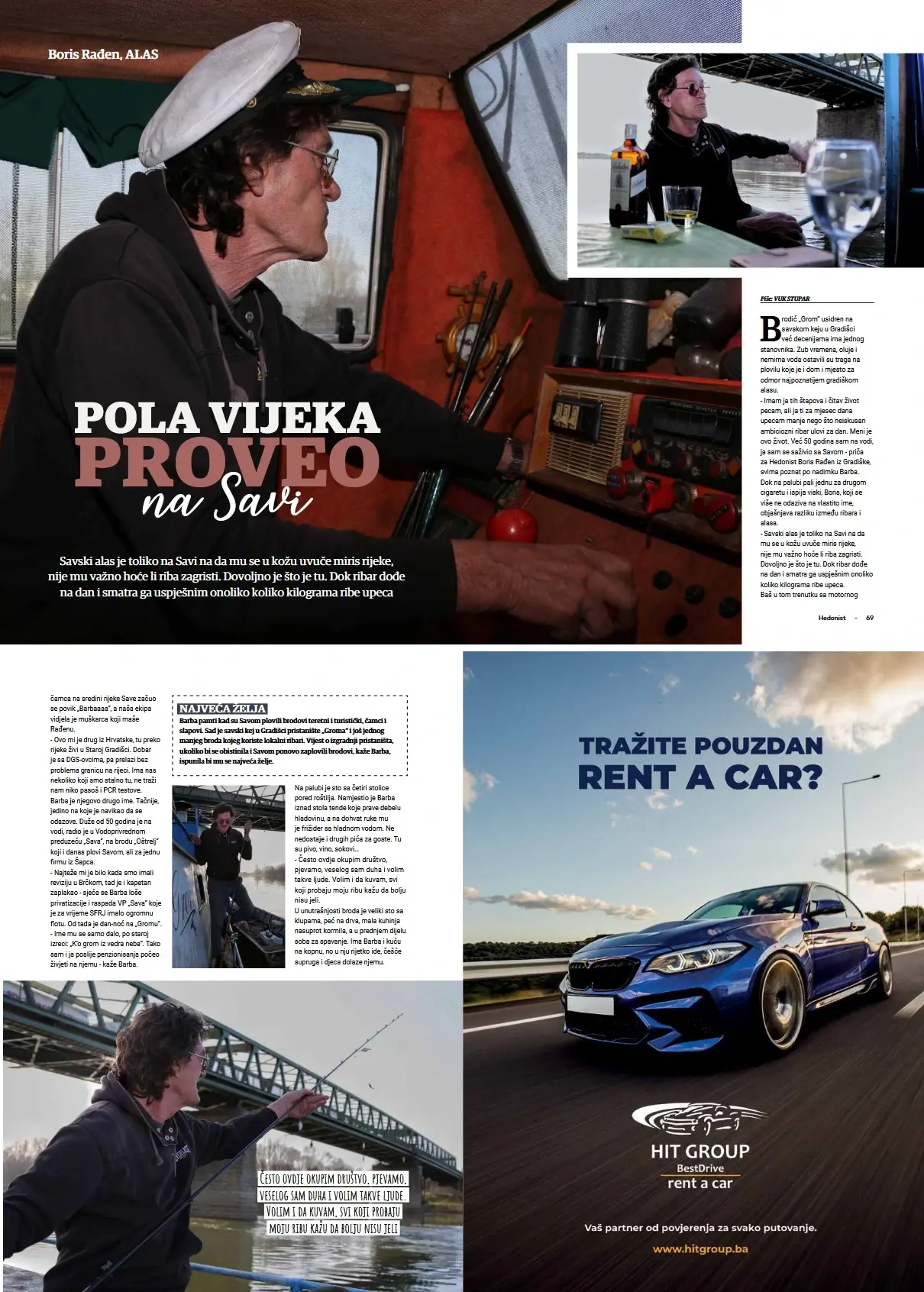
Half a Century on the Sava
![[object Object]](https://api.hedonistmagazine.net/storage/images/2026/02/2141920f-ef70-4ce9-ac40-3e6c52c08f28.webp)
The small boat Grom, moored along the Sava riverbank in Gradiška, has had a single resident for decades. The wear of time, storms, and restless water has left its mark on the vessel, which is both home and place of rest for the most well-known alas (traditional river fisherman) of Gradiška.
“I’ve got rods, and I’ve been fishing my whole life, but in a month, I catch less than an inexperienced, ambitious fisherman catches in a day. This is my life. I’ve been on the water for 50 years; I’ve become one with the Sava,” Boris Rađen from Gradiška tells Hedonist. Everyone knows him by his nickname - Barba.
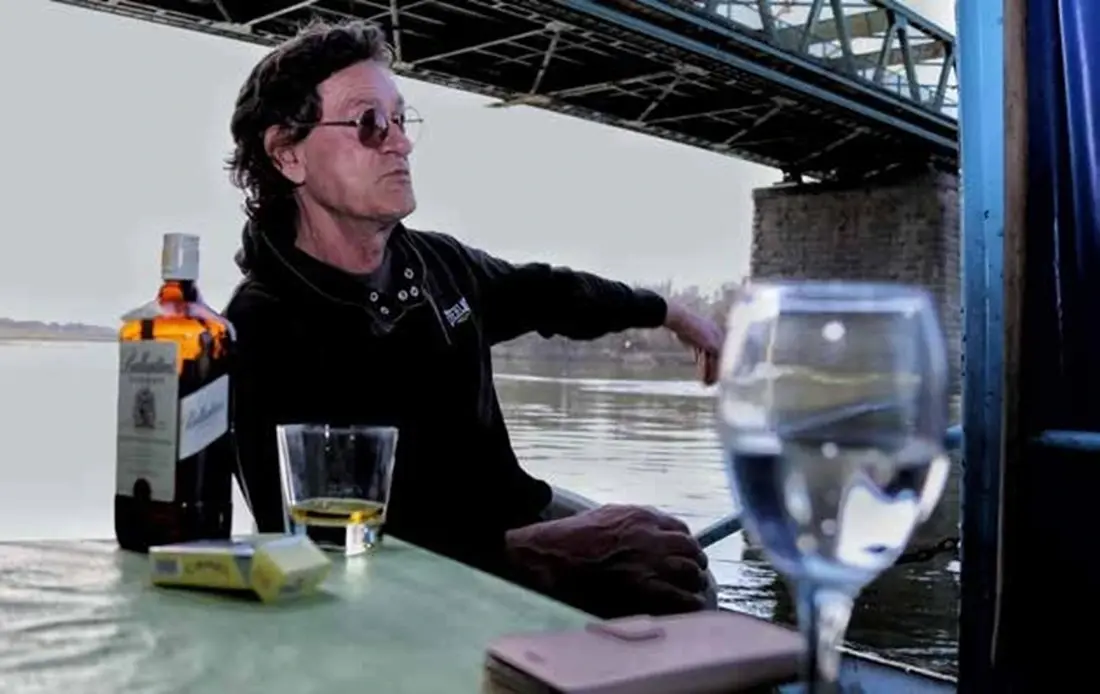
As he lights one cigarette after another on the deck and sips his whisky, Boris - who no longer answers to his given name - explains the difference between a fisherman and an alas.
“A Sava alas spends so much time on the river that the smell of it seeps into his skin. It doesn’t matter whether the fish bites. It’s enough just to be there. A fisherman comes for a day and measures success by how many kilos of fish he catches,” our interlocutor says.
At that very moment, a shout of “Barbaaaa” echoed from a motorboat midstream on the Sava, and our crew spotted a man waving to Rađen.
“That’s a friend of mine from Croatia - he lives just across the river in Stara Gradiška. He’s on good terms with the border police, so he crosses the river without any trouble. There are a few of us who are always here - no one asks us for passports or PCR tests.”
Barba is his second name - more precisely, the only one he’s accustomed to answering to. He has spent more than 50 years on the water. He worked for the Water Management Company “Sava,” aboard the vessel Oštrelj, which still sails the Sava today, though now for a company from Šabac.
It doesn’t matter whether the fish bites. It’s enough just to be there.
“The hardest moment was during the audit in Brčko - even the captain cried,” Barba recalls, remembering the failed privatisation and the collapse of VP “Sava,” which during Yugoslavia had an enormous fleet.
Since then, he has lived day and night on Grom.
“The name came by itself, from the old saying ‘like a bolt from the blue.’ That’s how I started living on it after retirement,” Barba says.
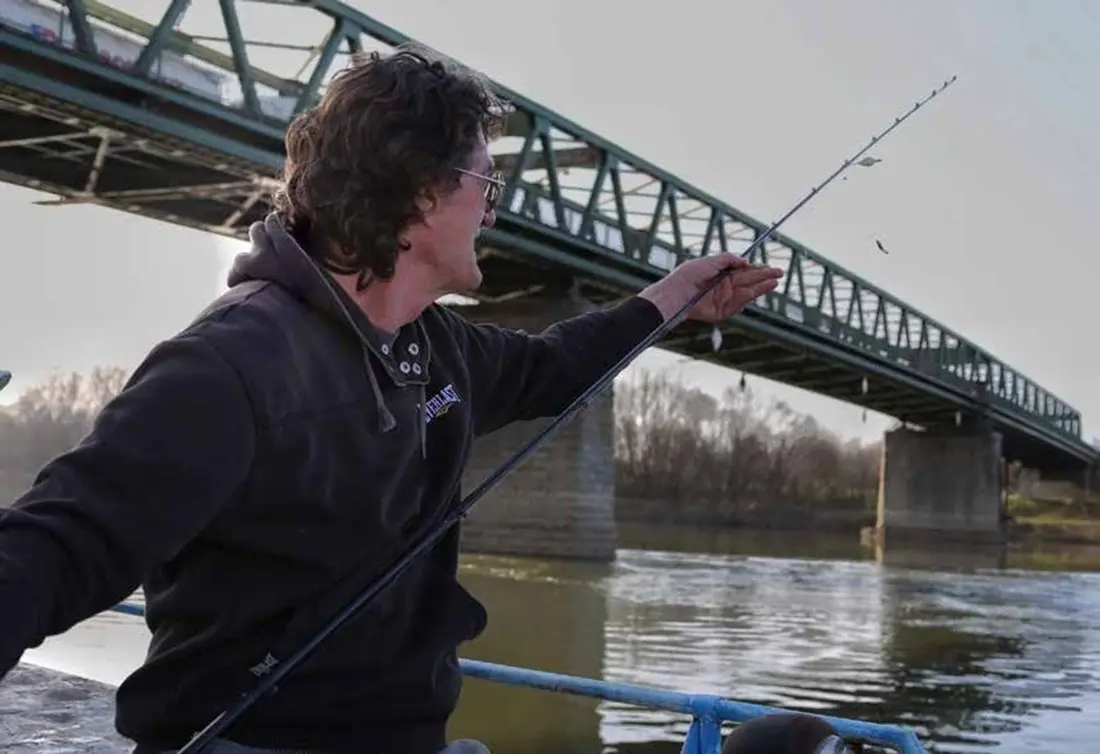
On the deck, there’s a table with four chairs next to the grill. Barba has set up awnings above the table that cast thick shade, and within arm’s reach, there’s a fridge stocked with cold water. Other drinks for guests aren’t missing either - beer, wine, juices…
I often gather friends here; we sing. I’m a cheerful spirit, and I love people like that. I also love to cook - everyone who tastes my fish says they’ve never eaten better.
Inside the boat, there’s a large table with benches, a wood-burning stove, a small kitchen opposite the helm, and a sleeping cabin in the bow. Barba also has a house on land, but he rarely goes there; more often, his wife and children come to visit him.
A Greatest Wish
Barba remembers when cargo and tourist ships, boats, and barges sailed the Sava. Today, the Sava quay in Gradiška serves as the mooring for Grom and one other smaller boat used by local fishermen.
News of plans to build a proper marina - if it were to come true and ships once again sailed the Sava - would, Barba says, fulfil his greatest wish.
- Written by: Vuk Stupar
- Photographs: HEDONIST
- Originally published in HEDONIST magazine, Issue 06, 2021