

Five Photographs That Changed the World

![[object Object]](https://api.hedonistmagazine.net/storage/images/2026/07/439d2d44-4ec2-4043-8c33-3b2e382253d0.webp)
Some photographs are captured almost by chance, in a fraction of a second, yet continue to shape history for decades. While most images preserve the past, a rare few alter the future. They transcend documentation to become symbols of an era, influencing public opinion, reshaping political decisions, and forever changing the way we understand the world.
The history of photography is filled with remarkable moments. Still, only a handful of images have moved beyond the realms of art and journalism to become part of humanity's collective memory. These are five photographs whose impact extended far beyond the paper on which they were first printed.
Napalm Girl - The Photograph That Changed the World's View of War
On June 8, 1972, Vietnamese photographer Nick Ut was near the village of Trảng Bàng when South Vietnamese aircraft mistakenly dropped napalm on an area populated by civilians. Moments later, terrified children emerged from the smoke.
Among them was nine-year-old Phan Thị Kim Phúc. Naked, severely burned, and crying out in agony, she ran toward photographers and soldiers. Nick Ut pressed the shutter at the precise moment that would become one of the most iconic war photographs ever taken.
Yet his role did not end there. After taking the photograph, he rushed Kim Phúc to a hospital and insisted that doctors treat her immediately. She survived her devastating injuries and would later become an international ambassador for peace.
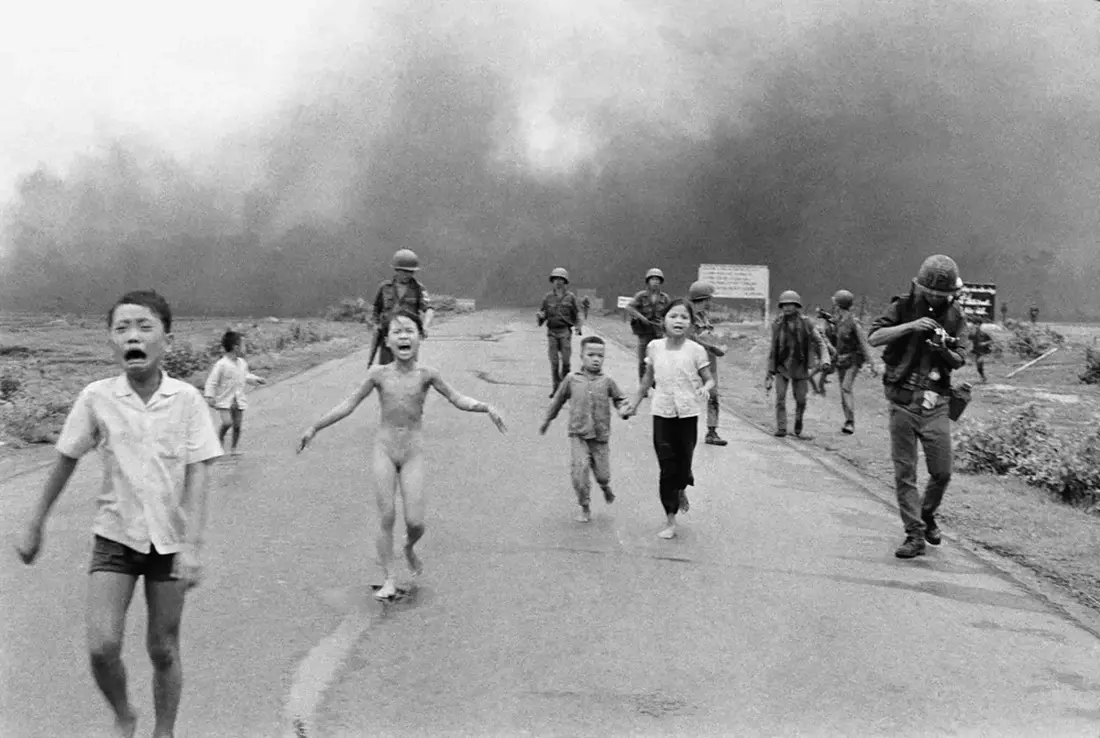
When the image appeared in newspapers around the world, it profoundly influenced public perception of the Vietnam War, particularly in the United States. For the first time, millions were confronted not with military briefings or casualty figures, but with the face of a child whose suffering came to symbolize the human cost of conflict.
Awarded the Pulitzer Prize, Napalm Girl remains one of the most powerful reminders that behind every military strategy are real human lives.
Earthrise - The Image That Changed How We See Our Planet
On Christmas Eve 1968, the astronauts of Apollo 8 became the first humans to orbit the Moon. During one of those orbits, something entirely unexpected happened.
As the spacecraft emerged from behind the lunar horizon, astronaut William Anders witnessed a sight no human had ever seen before: the blue-and-white Earth rising above the Moon's barren gray surface.
He quickly reached for his camera and captured the photograph that would become known as Earthrise.
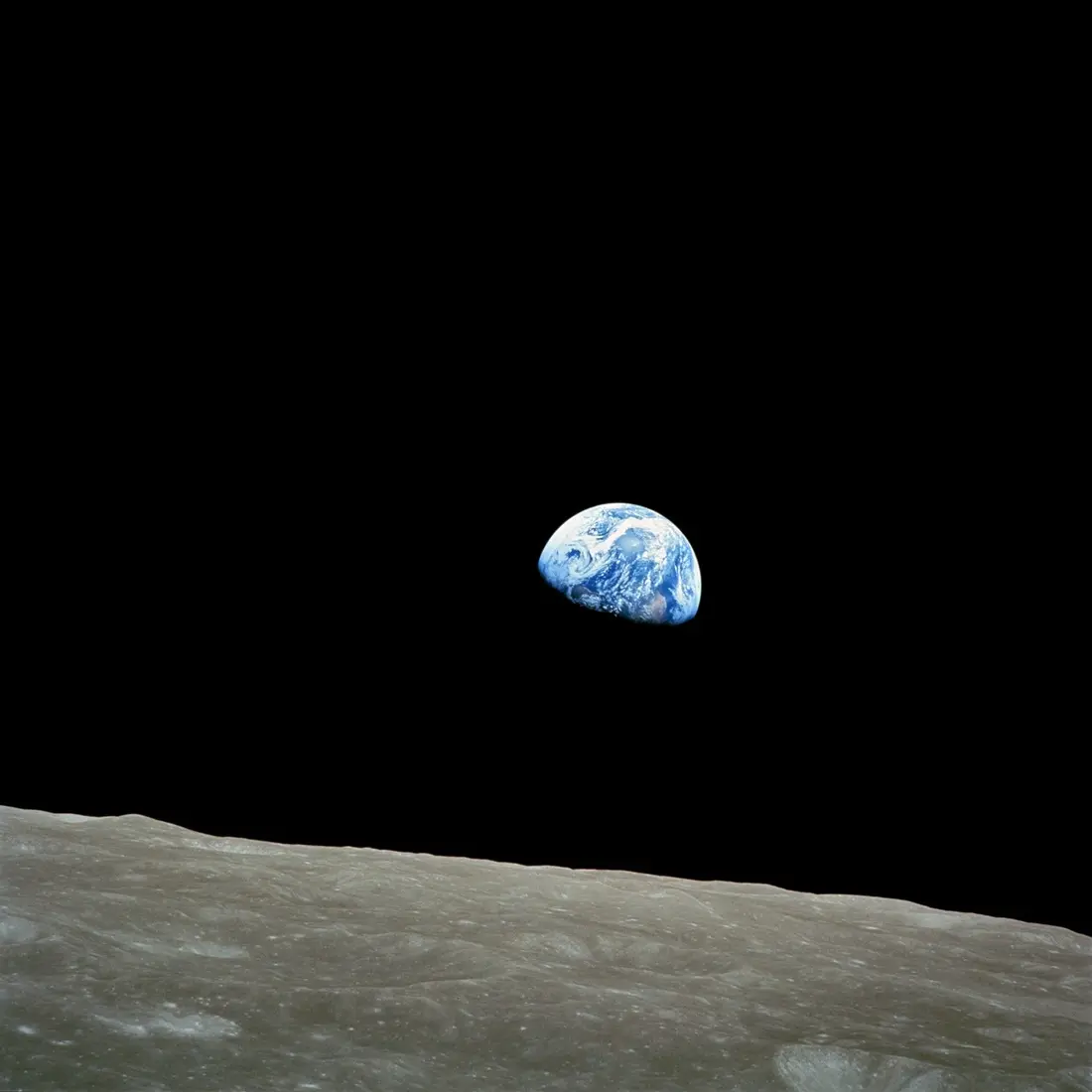
Ironically, photographing Earth was never the mission's objective. NASA had gone to study the Moon. Yet it was this image of our own planet that became Apollo 8's greatest legacy.
For the first time, humanity saw Earth as it truly is - small, fragile, and alone in the vastness of space. Without borders, nations, or political divisions, it appeared as a single shared home.
Many historians believe Earthrise helped inspire the modern environmental movement. Frequently used in conservation campaigns, it became a visual symbol of a simple but profound truth: there is no backup planet.
Sometimes, a single image accomplishes what thousands of speeches cannot.
Afghan Girl - The Gaze That Captivated the World
When American photographer Steve McCurry entered a refugee camp in Pakistan in 1984, he had no idea he was about to create one of the most recognizable magazine covers in history.
Inside a makeshift classroom, he noticed a young girl with striking green eyes whose expression conveyed fear, resilience, and quiet dignity. At the time, almost no one knew her name.
She was Sharbat Gula.
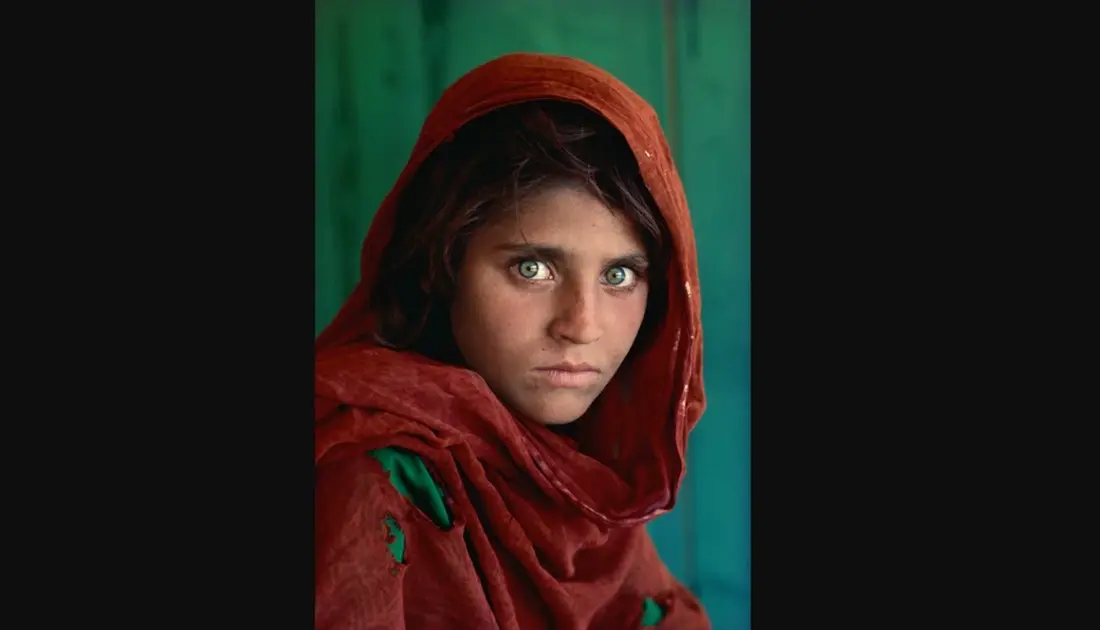
Published on the cover of National Geographic in 1985, the portrait quickly became a global symbol of the millions displaced by the Soviet-Afghan War.
Its extraordinary power lay not only in the girl's beauty, but in the emotion captured within her gaze. Viewers saw uncertainty, hardship, courage, and humanity all at once.
For years, her identity remained unknown. It was not until 2002 that Steve McCurry located Sharbat Gula in a remote region of Afghanistan. Photographs of their reunion traveled around the world almost as rapidly as the original portrait.
Afghan Girl demonstrated that a single face can tell the story of an entire nation.
Tank Man - The Unknown Man Who Stood Before the Tanks
On the morning of June 5, 1989, one day after the violent suppression of protests in Beijing's Tiananmen Square, a column of tanks rolled along a broad city boulevard.
Suddenly, an unidentified man wearing a white shirt and carrying two shopping bags stepped directly into their path.
He carried no weapon, wore no uniform, and had no one standing behind him. Yet the tanks stopped.
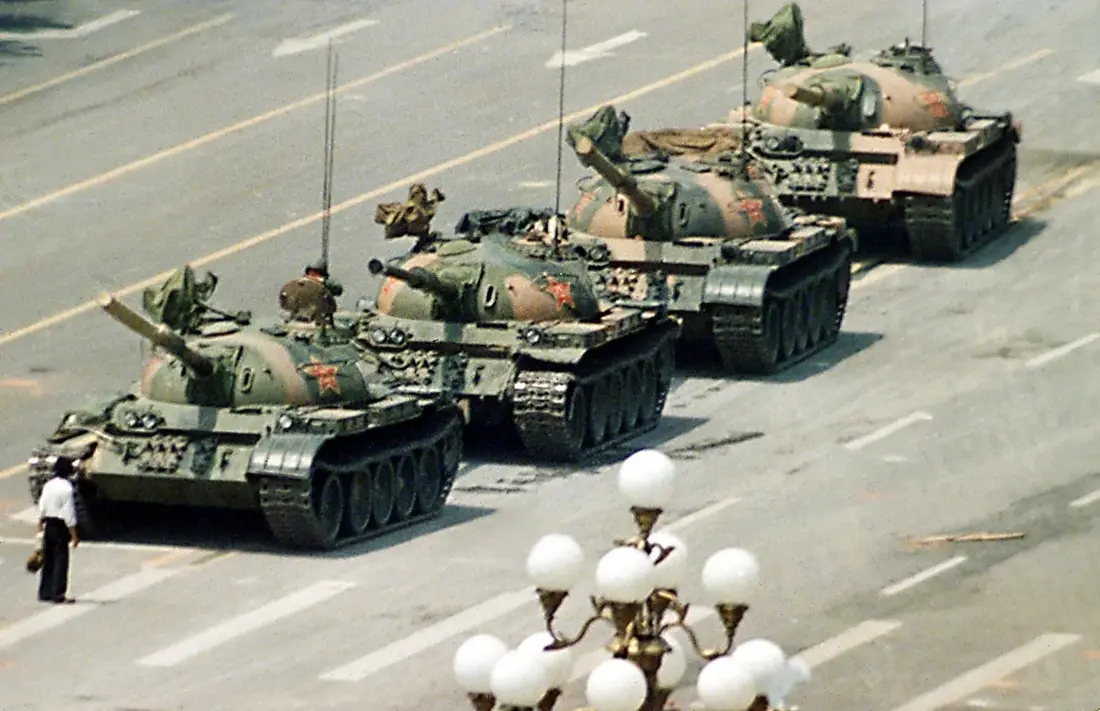
Photographers watching from nearby hotel windows captured a moment that would become one of the defining images of courage in modern history.
The man's identity has never been conclusively confirmed, and his ultimate fate remains unknown.
Perhaps that uncertainty is precisely what gives the photograph its enduring power. It is no longer simply the story of one individual - it represents every person willing to stand against overwhelming force.
Today, Tank Man remains one of the world's most enduring symbols of peaceful resistance and individual courage.
Migrant Mother - The Face of the Great Depression
In 1936, American photographer Dorothea Lange traveled across California documenting the devastating consequences of the Great Depression.
At a makeshift migrant workers' camp, she met Florence Owens Thompson, a mother of seven. Exhausted, anxious, and uncertain about the future, Thompson sat surrounded by her children, while two of her daughters buried their faces against her shoulders.
Lange took several photographs, but one image would become historic.
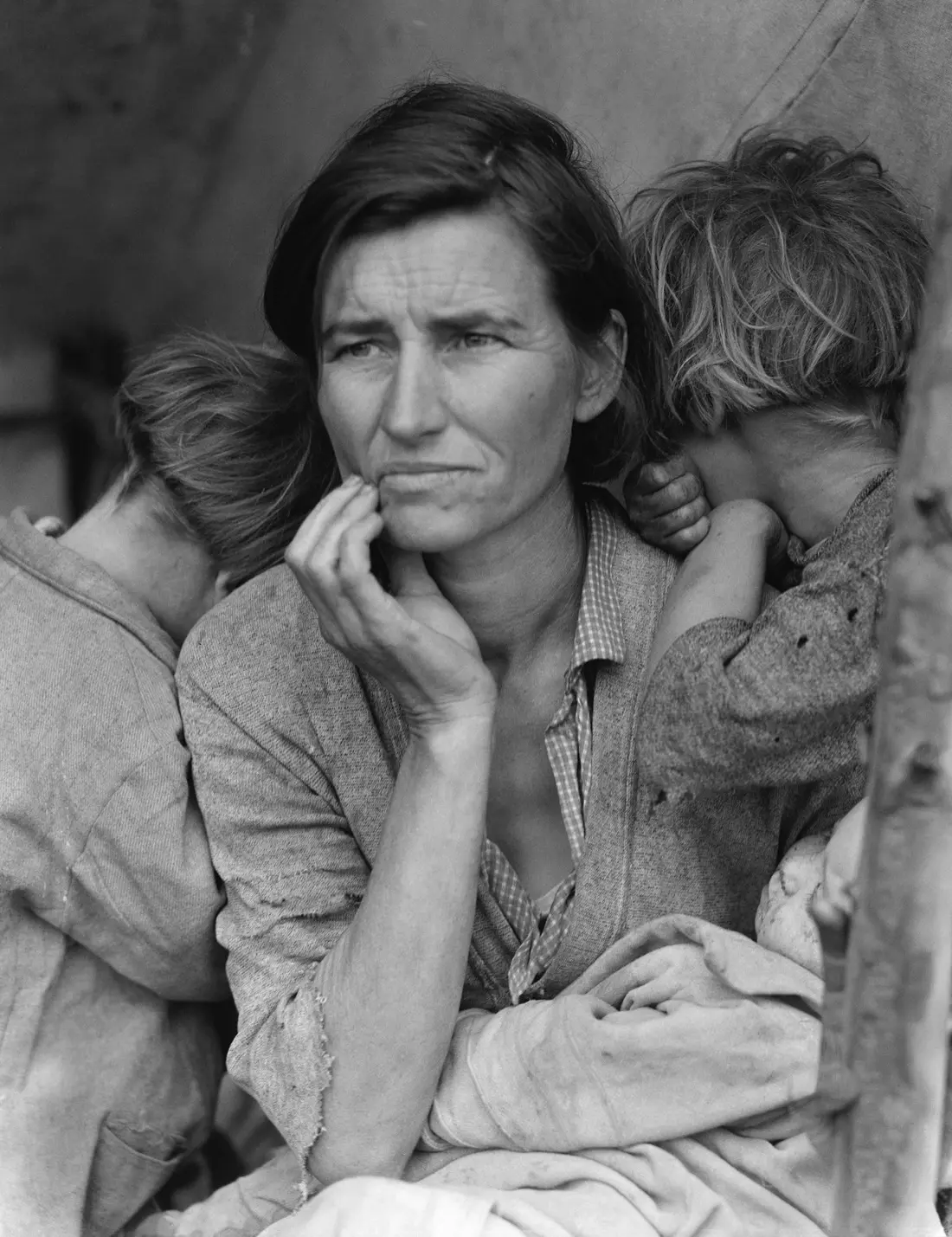
Published under the title Migrant Mother, the photograph generated an immediate public response. The reaction was so strong that the U.S. government quickly sent emergency food assistance to struggling farm workers in the area.
It marked one of the earliest instances in which a single photograph directly prompted urgent humanitarian action.
Over time, it became the defining visual symbol of the Great Depression and a lasting reminder that behind every economic crisis stand real people, real families, and real lives.