

Storm Chasers: Why Some People Drive Straight Into the Storm Everyone Else Is Trying to Escape
![[object Object]](https://api.hedonistmagazine.net/storage/images/2026/08/9e66df7f-0200-450c-bb0a-abeae5d5c7b5.webp)
Across the vast plains of America's heartland, a small community of people responds to tornado warnings in a way that seems almost unimaginable. While families seek shelter and highways empty, they fuel their vehicles, check their radar screens and head directly toward the darkening horizon. They are not chasing danger for its own sake - they are pursuing one of nature's most extraordinary spectacles.
When the Sky Becomes a Stage
Spring and early summer mean something very different across the open landscapes of Oklahoma, Kansas and Texas. Here, every weather bulletin is watched with unusual attention. Warm, moisture-laden air flowing north from the Gulf of Mexico collides with cold, dry air descending from the Rocky Mountains, creating the perfect conditions for towering supercell thunderstorms - the most powerful storm systems on Earth.
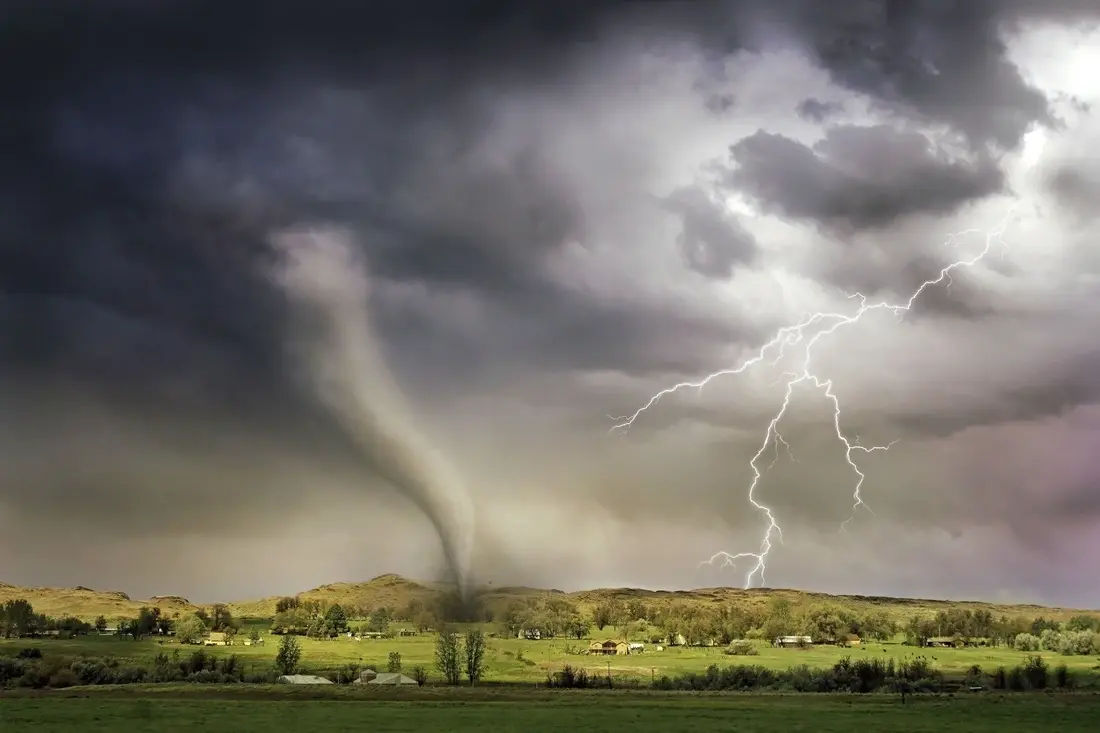
At first, everything appears deceptively calm. Dark clouds gather on the horizon, the air becomes heavy with humidity, and the wind falls strangely silent. Then the sky begins to rotate. A narrow funnel slowly descends from the cloud base, stretching toward the ground. The moment it makes contact with the earth, a tornado is born - a violently rotating column of air capable of transforming entire landscapes in a matter of minutes.
For most people, it is the unmistakable signal to flee. For storm chasers, it is the moment they have travelled hundreds, sometimes thousands, of miles to witness.
More Than Adrenaline Seekers
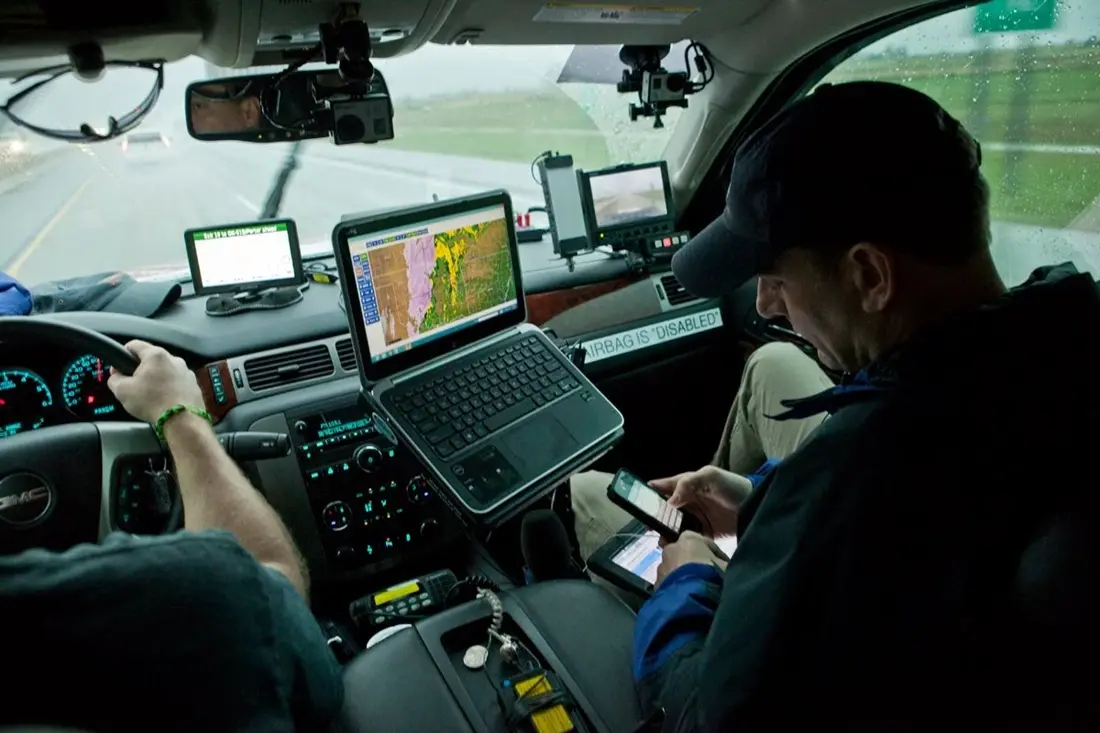
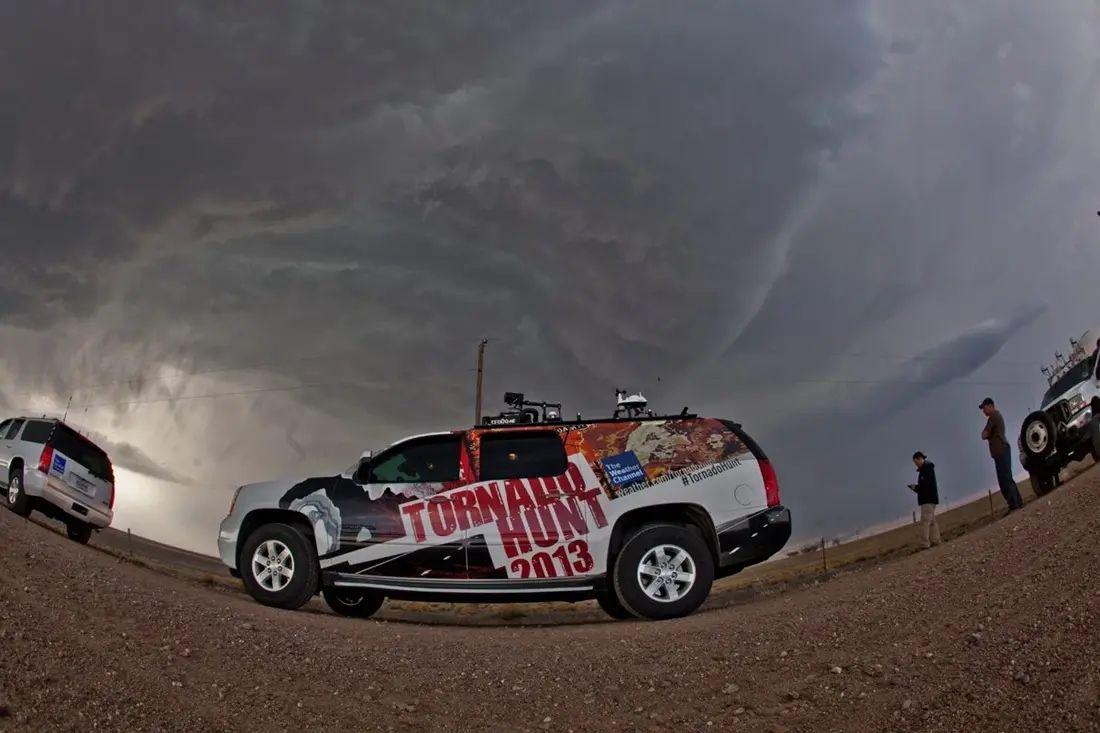
Popular culture often portrays storm chasers as thrill-seekers addicted to danger. The reality is far more nuanced. Many are meteorologists, climatologists, documentary filmmakers, professional photographers and researchers who have devoted years to understanding the behaviour of severe storms. Their vehicles resemble mobile weather laboratories far more than expedition trucks.
Mounted on their roofs are meteorological instruments, while the interiors are filled with radar displays, GPS systems, satellite communications, and high-resolution cameras that continuously record the storm's evolution. Every measurement collected in the field contributes to scientific research aimed at improving tornado forecasting and early-warning systems - advances that save lives every year.
That is why experienced storm chasers rarely attempt to get as close as possible to a tornado. Their goal is not proximity, but perspective: to observe the storm from a position that is both safe and scientifically valuable.
A Spectacle Unlike Any Other
No photograph can fully convey what it feels like to stand before a tornado.
A rotating column of air connecting sky and earth appears almost surreal. Lightning flashes continuously within the storm, illuminating towering clouds while dust, branches and debris spiral violently around the funnel. It is a scene that seems to exist somewhere between reality and myth.
Many photographers insist that no mountain summit, waterfall or sunset can rival the overwhelming sense of awe inspired by a tornado. It is not merely a weather event. It is nature revealing its raw power with breathtaking clarity.
Yet beneath that beauty lies extraordinary danger. Tornadoes can change direction without warning, intensify within moments or disappear behind curtains of rain, making them almost impossible to see until they are dangerously close. Even the most experienced researchers understand that no image is worth underestimating the forces unfolding before them.
Tornado Alley: Nature's Open-Air Laboratory
The world's best-known region for observing tornadoes lies across the central United States in an area commonly known as Tornado Alley. Stretching across parts of Texas, Oklahoma, Kansas, Nebraska, and South Dakota, this unique landscape experiences hundreds of tornadoes each year due to the collision of contrasting air masses, which creates ideal conditions for severe thunderstorms.
It has become an open-air laboratory for atmospheric science. Mobile Doppler radar units, weather balloons, drones and increasingly sophisticated meteorological sensors allow researchers to gather data that would have been unimaginable only a few decades ago. Every storm observed helps scientists better understand how tornadoes form and how communities can receive earlier and more accurate warnings before disaster strikes.
Respecting Nature's Greatest Force
The dramatic videos that dominate social media often create the impression that storm chasers are simply people testing their luck against nature. In reality, the most respected professionals approach every expedition with meticulous planning, scientific discipline and profound respect for the storms they study.
Their greatest reward is not the adrenaline. It is the rare opportunity to document one of the planet's most extraordinary natural phenomena. The photographs they capture and the footage they record become part of scientific archives, educational programmes, documentaries and magazine covers that inspire millions of people around the world.
Perhaps that is why storm chasers continue to fascinate us. Not because they attempt to conquer nature, but because they remind us that some forces can never be conquered. When a vortex powerful enough to uproot century-old trees, lift vehicles into the air and erase entire neighbourhoods in minutes appears on the horizon, human ambition suddenly feels very small.
Such moments reveal an uncomfortable truth. There are still places where nature writes the rules. And that may be precisely why storm chasers keep returning - not to defy the storm, but to witness, with humility and wonder, one of the last great spectacles our planet still performs entirely on its own.
- Editor's note: Professional storm chasers operate with extensive meteorological knowledge, real-time weather analysis and strict safety protocols. Approaching severe storms without the appropriate training and experience can be extremely dangerous.