

A Guest in Someone Else's Forest: Walking Among the Mountain Gorillas
![[object Object]](https://api.hedonistmagazine.net/storage/images/2026/09/03377276-460b-47f0-ad6e-9ff41ad586eb.webp)
A person walks for several hours through dense, damp forest, climbing volcanic slopes, pushing through vegetation as thick as a wall, trying to follow the tracks of animals that move through it far more easily than he does. There's no zoo, no fence, no glass - mud up to the knees, sweat mixing with the morning damp, and a ranger who occasionally raises a hand to signal the group to stop and listen.
And then, at some point, the guide turns and quietly says they're close. That's the essence of the experience, and everything that follows justifies every minute of the climb.
A Morning That Begins With Uncertainty
The day starts early, usually around seven, with a short briefing from the rangers and a split into small groups of no more than eight people - a number that isn't arbitrary but strictly set by park regulations to limit the stress placed on the gorillas. Trackers, whose sole job is to follow the gorilla families, head into the forest before dawn, relying on the previous day's trail to estimate where a given group might be that morning. Tourists only set out once there's at least a rough idea of which direction to head.
What follows doesn't resemble any other form of wildlife viewing. The trek can last anywhere from two to seven hours, depending entirely on where the family moved the night before - gorillas know nothing of tourist schedules, and no amount of money can speed up their movement through the forest. That uncertainty, however hard on the legs, is part of what makes the experience worth having: nothing here is staged.
The Moment the Leaves Part
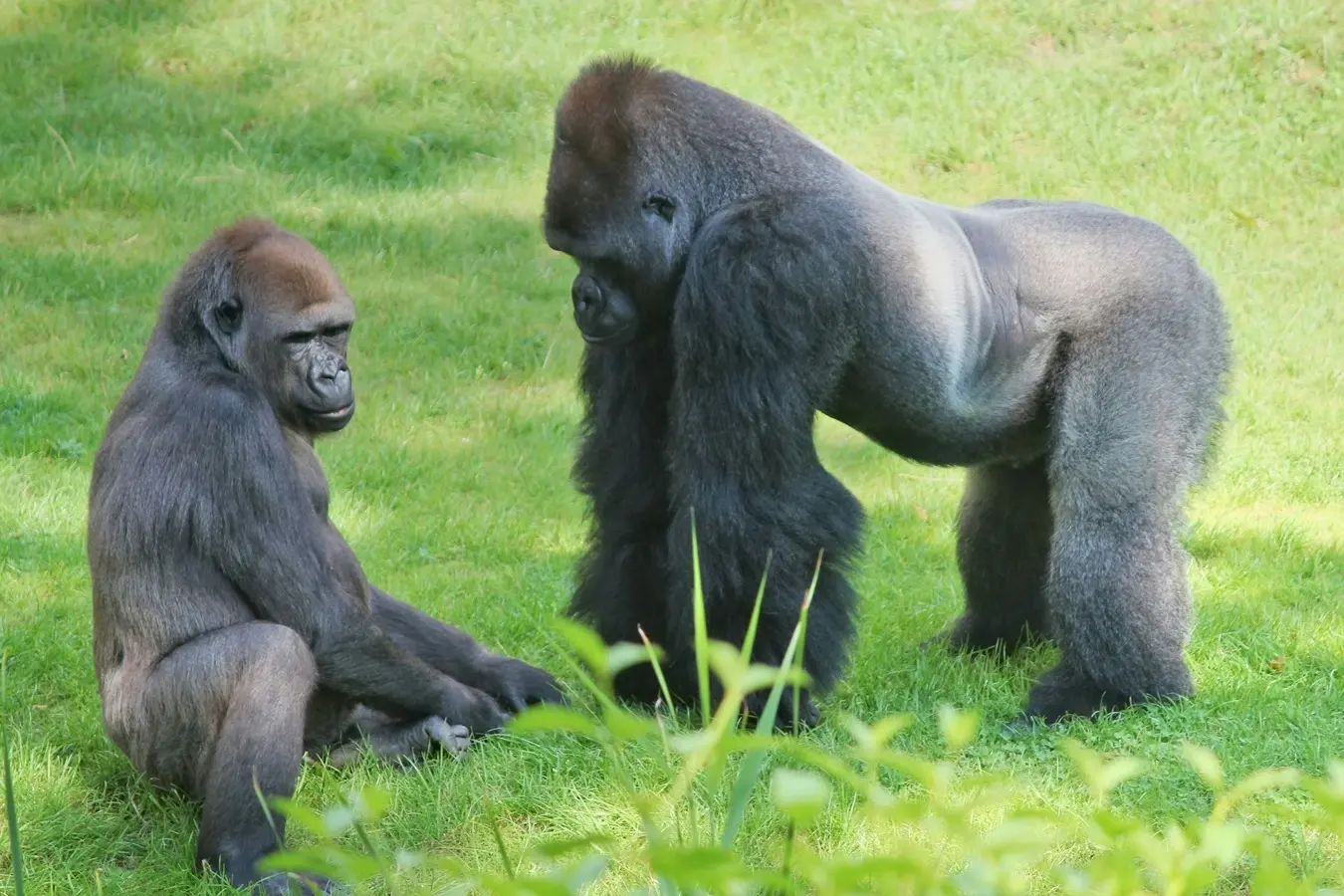
The best part of the story isn't the gorilla itself so much as the moment right before a person sees one. Rangers hear the sound first - branches breaking, a deep, almost human grunting - before any of the tourists move or manage to spot the animal through the green. And then, out of the dense vegetation, emerges the silhouette of an adult male, a silverback, weighing as much as two hundred kilograms, who carries on eating leaves as if none of the people present exist.
It's precisely that indifference that leaves the strongest impression. The gorilla doesn't flee, doesn't attack, doesn't change its behaviour for an audience of a few people standing ten metres away, breathless and, as a rule, struck silent. This isn't an animal trained to perform. It's a wild creature simply continuing its day, while the humans, out of respect and fear of disrupting that day, stay completely quiet.
One Hour, Not a Minute More
However long the climb took, time spent with the family is strictly limited to one hour - a rule that applies equally in Uganda and Rwanda, and is observed without exception. Within that hour, there's no camera flash, no raised voices, no approaching closer than the prescribed limit, which stands at seven metres in Rwanda, while Uganda, since the pandemic, has increasingly applied a distance of ten. Unwell visitors can be denied access entirely, since gorillas share roughly ninety-eight percent of their genetic material with humans, making them just as susceptible to something as ordinary as a common cold as we are.
These rules aren't a formality written to pad out a brochure. They're the reason the mountain gorilla population exists in the form we find it in today at all.
Animals That Learned to Tolerate, Not to Be Tamed
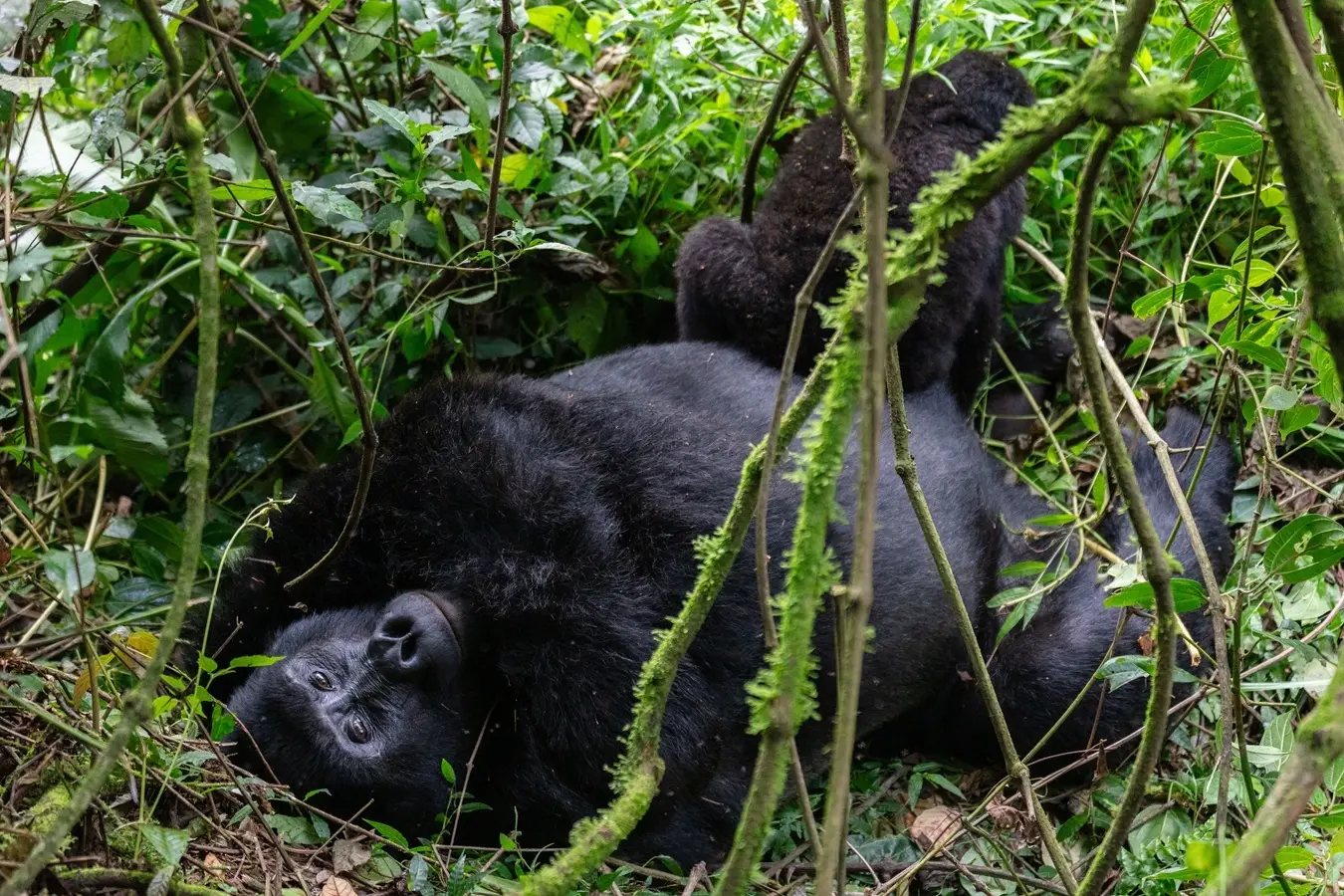
The key word in this whole story is habituation - a long process in which rangers and researchers, over two to five years, spend time near a particular gorilla family every single day, gradually shortening the distance until the animals grow accustomed to human presence. Habituation doesn't mean domestication. The gorillas remain wild in every sense of the word - they hunt for food, mate, defend territory, raise their young by their own rules. The only thing that's changed is that they no longer see humans as a threat to flee from or confront.
At present, around fifteen families in the Bwindi-Virunga region have been habituated for tourist visits, while additional groups are being prepared through a process that takes years and is never rushed.
An Experience That Pays for Its Own Survival
The cost of this adventure is not insignificant. A permit for a foreign visitor in Uganda runs at eight hundred dollars in 2026, while in Rwanda it's exactly double that - fifteen hundred dollars. For that price, you get one hour with a family, the work of trackers who located the gorillas at dawn, and an armed ranger escort through the forest.
Though the figure looks extreme at first glance, its logic is almost cynically simple: a high price keeps visitor numbers low, reducing pressure on the animals, while at the same time generating enough revenue to justify their protection in the eyes of local communities who might otherwise have reason to see the forest as an obstacle rather than an asset. In Uganda, as much as seventy-five per cent of every permit fee goes directly back into conservation efforts, while ten per cent goes to the surrounding communities whose ancestral lands were ceded to the parks. The results of that arithmetic are measurable in numbers that would have seemed unimaginable just three decades ago: from fewer than three hundred individuals at the end of the twentieth century, the mountain gorilla population today exceeds a thousand - enough for the International Union for Conservation of Nature to move them from critically endangered to simply endangered.
A Forest That Sets the Rules
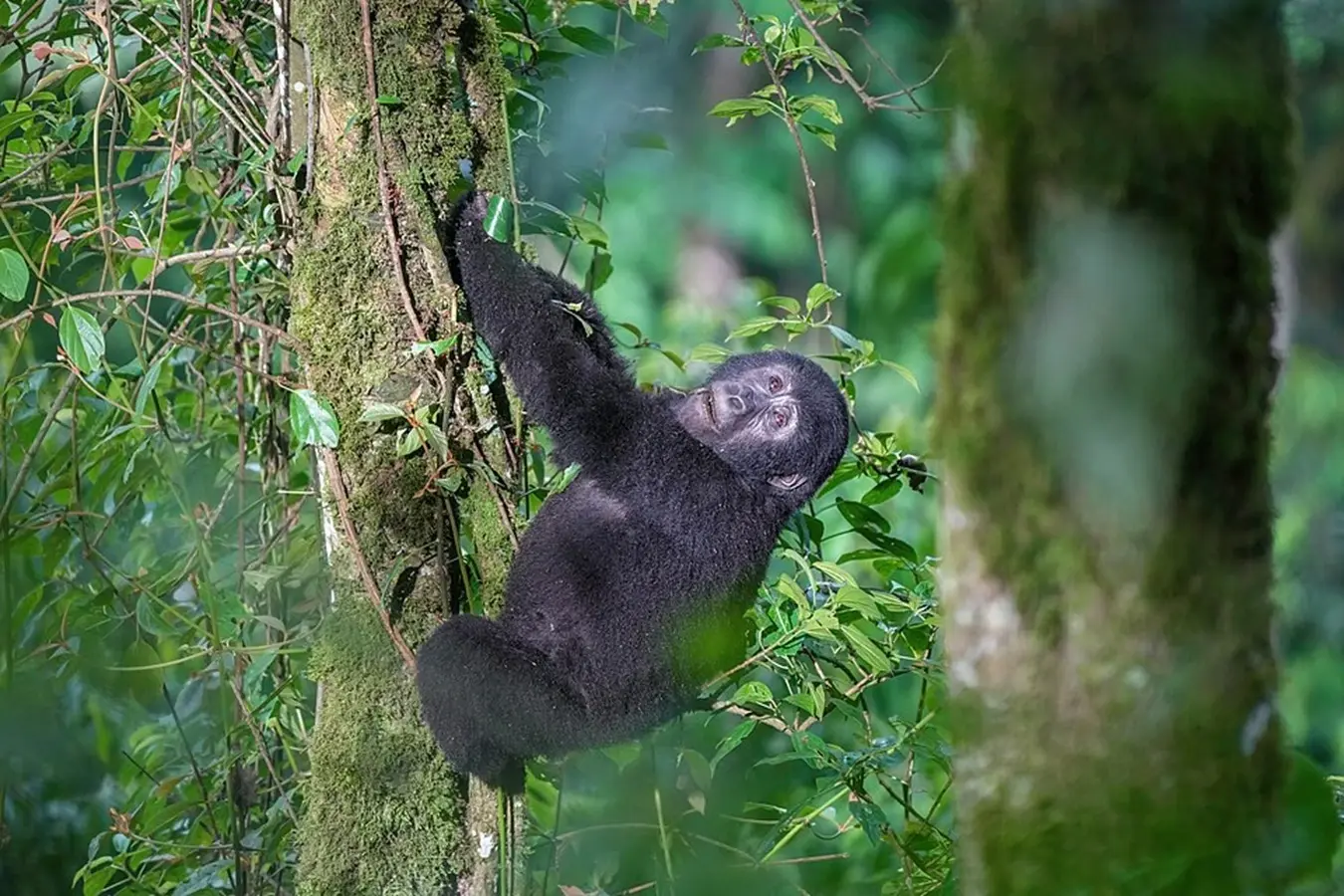
In the end, what sets this adventure apart from any other encounter with wild animals is a complete reversal of roles. A person enters the forest thinking he's going to see the gorillas. A few hours later, he realizes he's actually a guest in their space, playing by their rules, on their time - allowed to stay exactly as long as he's been granted, not a minute longer. Few journeys remind a person so clearly that he isn't the one who decides when the show is over.
Related articles
Unusual Animals of the World: Nature That Never Stops Surprising
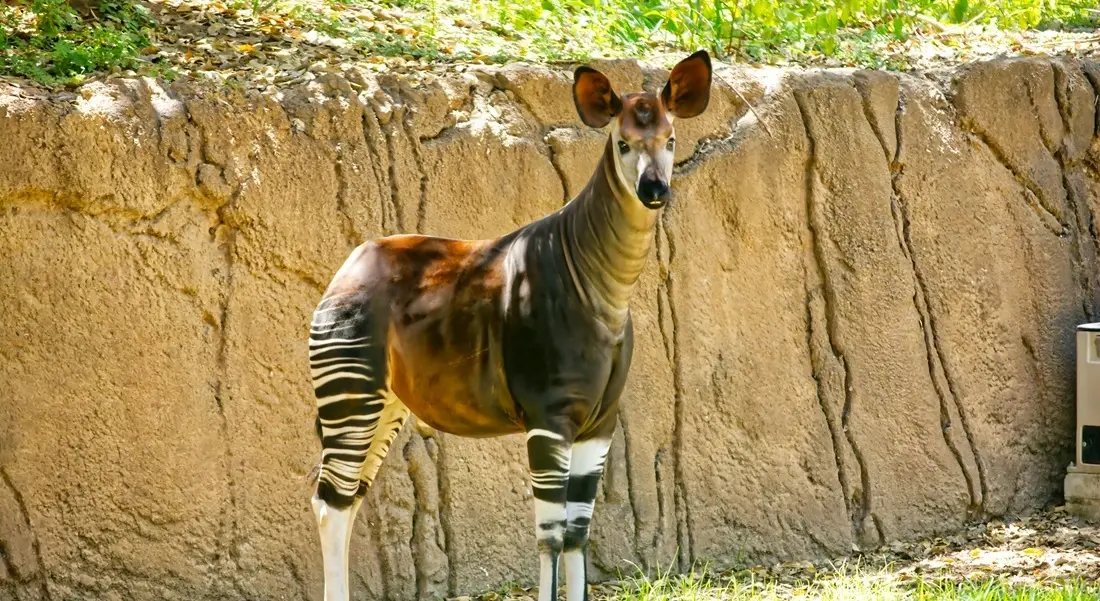
Nature doesn’t follow the rules we expect. The longer you observe it, the clearer it becomes that “normal” doesn’t really exist in the animal world. Some species look as if they were created by accident, others like experiments that turned out better than anyone planned.
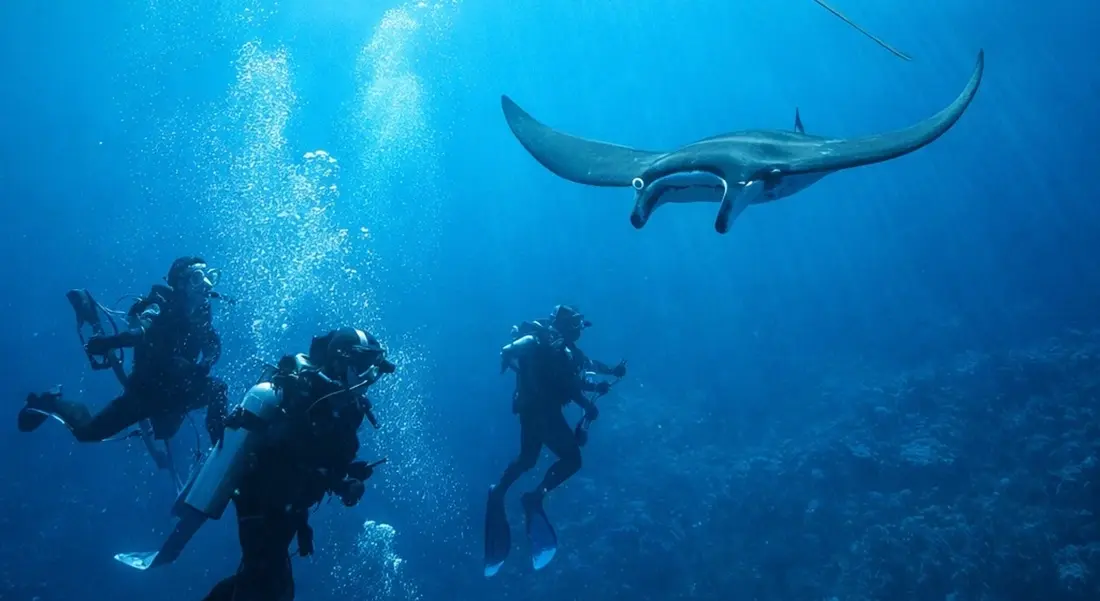
Diving with rays in the Azores: An adventure you never forget
In the middle of the Atlantic Ocean, where Europe ends, and the ocean takes over, the Azores offer one of the most distinctive diving experiences in the world — an encounter with rays in their natural habitat. No aquariums, no glass, no choreography. Just the silence of the depths and the slow, almost hypnotic dance of these elegant marine creatures.