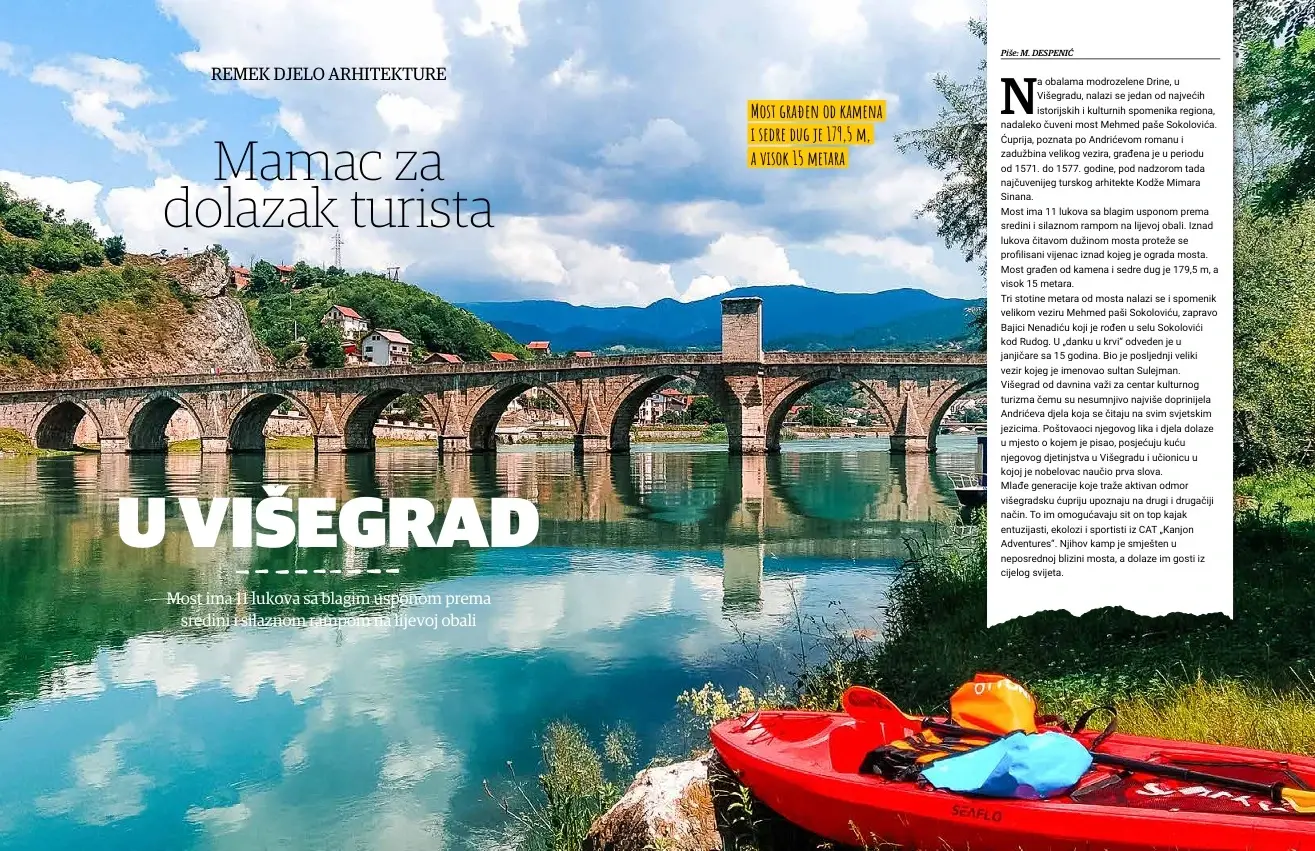
Mehmed Pasha Sokolović Bridge: A Magnet for Tourists Visiting Višegrad
![[object Object]](https://api.hedonistmagazine.net/storage/images/2026/09/9e9c325d-80e6-461d-ac18-2e29ad2febf5.webp)
On the banks of the deep blue-green Drina River in Višegrad stands one of the region’s greatest historical and cultural monuments – the world-famous Mehmed Pasha Sokolović Bridge. Known through Ivo Andrić’s novel and built as an endowment of the Grand Vizier, the bridge was constructed between 1571 and 1577 under the supervision of Kodža Mimar Sinan, the most renowned Ottoman architect of his time.
The bridge has 11 arches, with a gentle rise towards the centre and a descending ramp on the left bank. A moulded cornice runs along the entire length of the bridge above the arches, topped by the bridge’s parapet. Built of stone and tufa, the bridge is 179.5 metres long and 15 metres high.
Three hundred metres from the bridge stands a monument to the Grand Vizier Mehmed Pasha Sokolović, born Bajica Nenadić in the village of Sokolovići near Rudo. At the age of 15, he was taken into the Janissary corps through the devşirme system, known as the “blood tax”. He became the last Grand Vizier appointed by Sultan Suleiman.
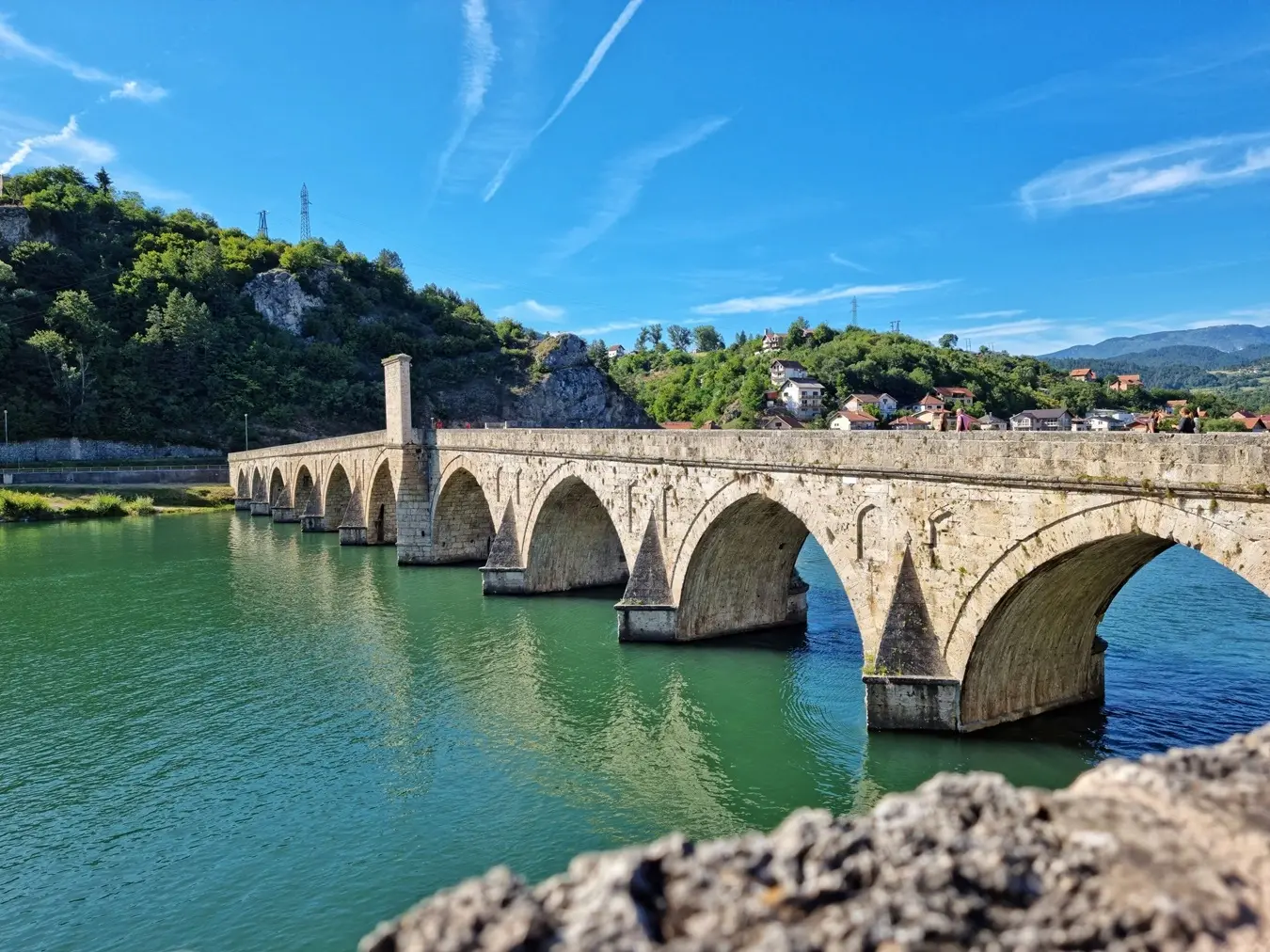
Višegrad has long been regarded as a centre of cultural tourism, undoubtedly due in large part to the works of Ivo Andrić, which are read in languages around the world. Admirers of his life and work come to the places he wrote about, visit the house where he spent his childhood in Višegrad and the classroom where the future Nobel laureate learned his first letters.
Younger generations seeking an active holiday are discovering the Višegrad bridge differently. Sit-on-top kayak enthusiasts, environmentalists, and athletes from CAT “Kanjon Adventures” make this possible. Their camp is located in the immediate vicinity of the bridge, attracting visitors from all over the world.
- Written by Miloš Despenić / HEDONIST