

How the color of mourning became the color of elegance

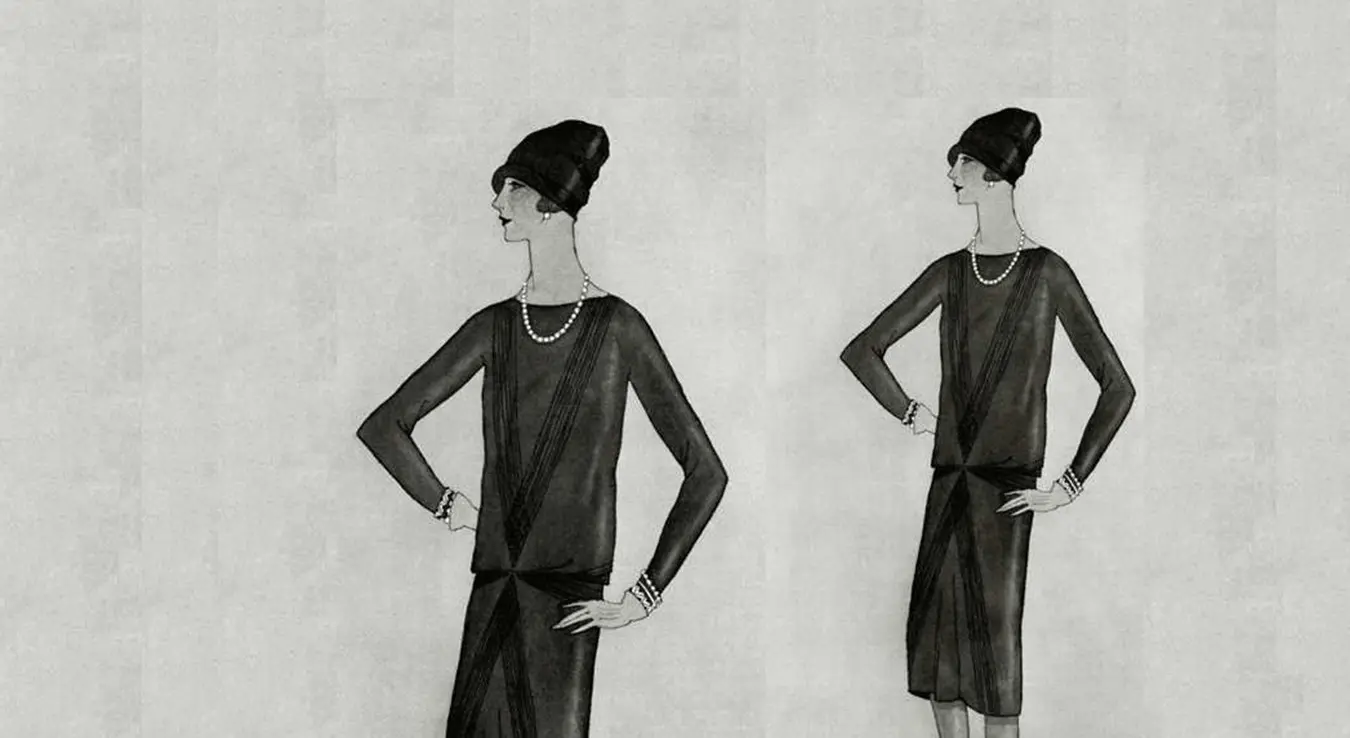
In October 1926, American Vogue published a sketch of a simple black dress made of crêpe de Chine, straight in cut, with long, narrow sleeves. Beneath it ran a line that entered fashion history: “Chanel’s Ford”, the dress that the whole world would wear. The comparison hit the mark. Henry Ford liked to say that his Model T was available in any color, as long as it was black.
In October 1926, American Vogue published a sketch of a simple black dress made of crêpe de Chine, straight in cut, with long, narrow sleeves. Beneath it ran a line that entered fashion history: “Chanel’s Ford”, the dress that the whole world would wear. The comparison hit the mark. Henry Ford liked to say that his Model T was available in any color, as long as it was black.
As advertising, it was brilliant. As a description, it stretched the truth. At the time, the House of Chanel was showing several different black dresses in Paris, nothing like a single standardized automobile, as the Smithsonian observes.
The story usually told about that dress goes like this: with one stroke, Coco Chanel pulled black out of funerals and ushered it into the salons. It isn’t true. Black had been present in European elegance for at least five centuries before her. What Chanel did was something else, and in the end more interesting: she carried black over from men and widows to the woman going out to lunch.
An Expensive Color

Until the fifteenth century, black was hard to make and even harder to keep. Researchers on the Refashioning the Renaissance project at Finland’s Aalto University note that it was the most difficult color to dye, because it washed out easily and deteriorated faster than the others. A deep, lasting black was obtained through costly processes, for example by dyeing cloth first blue and then red with madder, or with tannins from oak galls and iron salts. That is why saturated black was proof of money.
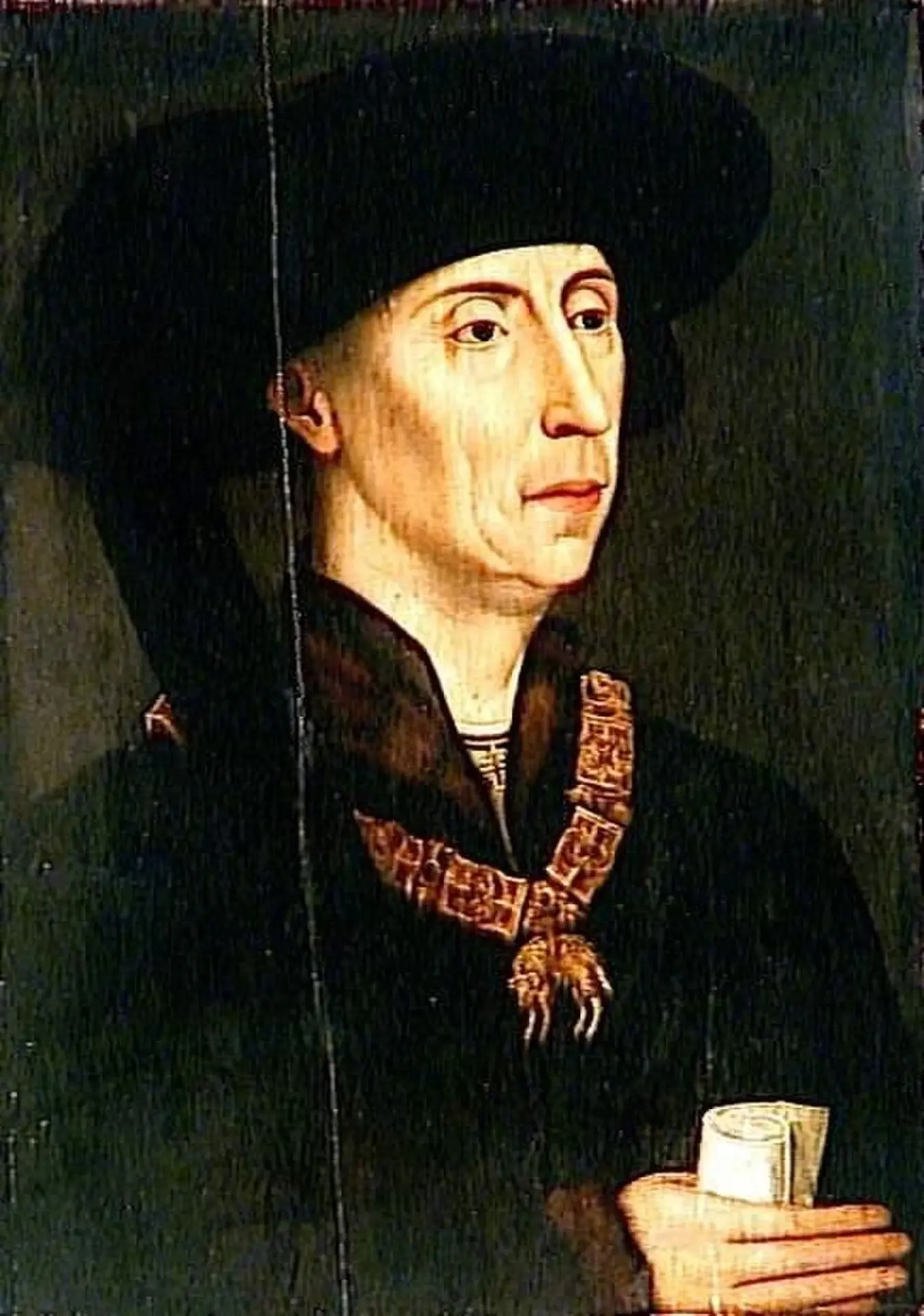
The fashion career of black is usually traced to Philip the Good, Duke of Burgundy (1396–1467). He first wore it in mourning for his father, murdered in 1419, and then never took it off. His court in Flanders, then the greatest textile center of Western Europe, set the tone for everyone else, and black became the signature of power.
What follows might be called the first great fashion shift of color in history. In fifteenth-century portraits, powerful men consistently wear crimson silk and scarlet broadcloth, while in the sixteenth almost all of them, from Italian courts to ruling monarchs, wear black. The decisive role was played by the Spanish court of Charles V (1500–1558) and Philip II (1527–1598), the most powerful state in the world at the time. In The Book of the Courtier (1528), Baldassare Castiglione advised the ideal courtier to dress soberly, in black or at least in dark tones.
Historian Paula Hohti, author of the research mentioned above, offers a fact that overturns the idea of black as a privilege of the elite. According to postmortem inventories from Venice, Florence and Siena (1550-1650), more than 40 percent of artisans’ clothing for which a color was recorded was black. Cheaper recipes for home dyeing existed, and a Venetian manual by Giovanni Battista Rossetti from 1548 contains as many as 21 recipes for black. So black very early became the color of ordinary people as well.
Mourning Gets a Uniform
In the nineteenth century, black belonged to men. Beau Brummell is credited with freeing fashion from color: instead of silks and embroidery, a dark, perfectly tailored coat and a starched white cravat. Historian John Harvey devoted a book to the subject, Men in Black (1995), tracing how black became the uniform of the modern man.
For women, black mostly meant mourning, and one woman is most responsible for that. Prince Albert died on December 14, 1861, of typhoid fever, at the age of 42. Queen Victoria withdrew from public life and remained in mourning for the rest of her life, some forty years. Court rules on mourning became a strict code that bound all layers of society. In deep mourning, only jewelry made of jet was permitted in the first year, the black fossilized wood from Whitby in Yorkshire, where at one point around 200 workshops were operating. The poorer wore black glass, so-called French jet. The strict rules began to relax after her Golden Jubilee in 1887, and disappeared only with her death in 1901.
At the beginning of the twentieth century, black could mean one of two things for a woman: mourning or service. A plain black dress was the clothing of maids and widows, certainly not of high fashion.

War, Widows and One Short Dress
The First World War and the Spanish flu left France full of widows. According to writer Colin Bissett, black was in those years the everyday dress of many Frenchwomen. While other designers treated grief with color, Chanel embraced darkness.
Private grief coincided with public grief. In December 1919, Arthur “Boy” Capel, her lover and the financier of her first boutique, whom she regarded as the great love of her life, died in a car accident. Biographers and museums, among them London’s V&A, link her mourning to the development of the black dress.
Still, the dress did not appear overnight. According to encyclopedic sources, Chanel was making black dresses as early as around 1913, when she sewed a black velvet model with a white collar for Suzanne Orlandi. By the time of Vogue’s sketch in 1926, more than ten years of work had gone by.
Biographers also relay two legends about its origin. According to the first, Chanel watched Paul Poiret’s colorful creations during an opera intermission and decided to answer them in black. According to the second, she said that because of Capel she would “dress the whole world in black”. Neither has a reliable source, so they should be read as legends. She is also credited with the thought that she imposed black because it wipes out everything else around it.
After Chanel
After 1926, black continued to change its meaning. In 1961, Hubert de Givenchy designed a long black dress for the opening scene of Blake Edwards’s Breakfast at Tiffany’s, in which Audrey Hepburn eats a pastry in front of a jeweler’s window. One of the originals was sold on December 5, 2006, at Christie’s in London for £467,200 (about $923,000), against an estimate of £50,000 to £70,000. It was then a record for a dress from a film, and the money went to a school in Kolkata.
By 1981, black was once again rebellion. Yohji Yamamoto and Rei Kawakubo (Comme des Garçons) showed their wide, asymmetrical black silhouettes in Paris for the first time. Critics called them “Hiroshima chic” and “post-atomic”, and their followers “crows”. Kawakubo rejected the reading of her work through a postwar childhood. Yamamoto said of black that it is at once modest and arrogant and that, above all, it says: don’t bother me.
Looking back, black was never a color of a single meaning. To the Duke of Burgundy it meant mourning and power, to the Spanish court authority, to Victoria grief, to Chanel modernity and democracy, to Kawakubo refusal. One constant remains: whoever wears black is saying something.