
The Western Balkans Is Not a Periphery: "FLOW/TOK" Travels from Kotor to Brussels

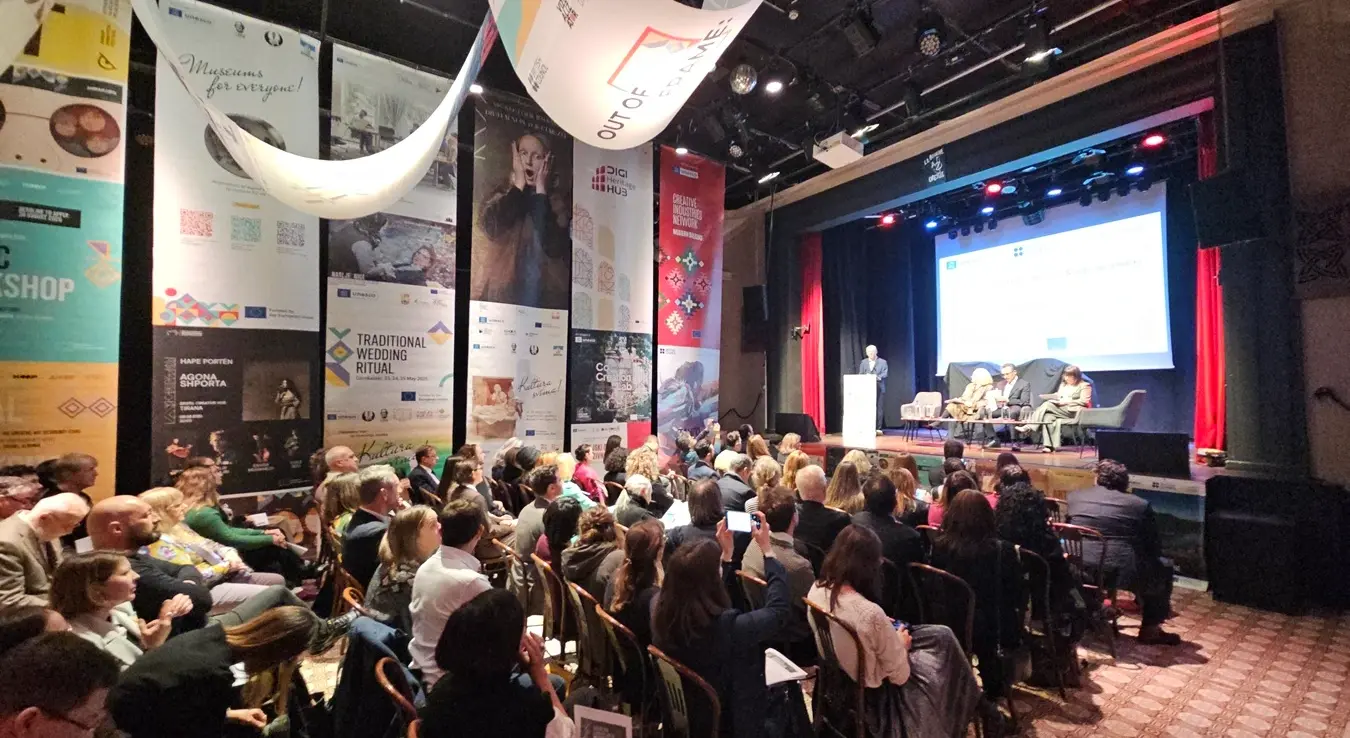
Marija Džoganović's installation, presented by CIM Forum at a UNESCO event, brought together the visual stories of projects supported by the programme "Culture and Creativity for the Western Balkans"
When a regional programme ends, what usually remains are reports, spreadsheets, and photographs from round tables. This time, Brussels was left with an installation that visitors can walk through. At UNESCO's invitation, CIM Forum presented the exhibition "FLOW/TOK" on Wednesday, 18 November, at Le Bouche à Oreille, as part of an event dedicated to the results of the four-year programme "Culture and Creativity for the Western Balkans" (CC4WBs).
The Programme Behind the Exhibition
CC4WBs is an eight-million-euro project funded by the European Union. It is implemented by UNESCO, the British Council and the Italian Agency for Development Cooperation (AICS), and aims to strengthen the cultural and creative sector, regional cooperation and intercultural dialogue. The event in Brussels brought together representatives of European institutions and international organisations, as well as artists and professionals from the region's cultural and creative sector. Alongside the exhibition, the programme included panel discussions and a musical part of the evening, featuring, among others, the Sarajevo collective Helem Nejse and the band Letu Štuke.
A Wall That Does Not Close the Space
The installation was created by artist and curator Marija Džoganović, a member of the CIM Forum team and Dean of the Faculty of Visual Arts at the University of Montenegro in Podgorica. It brings together the visual materials of projects, creative initiatives and regional partnerships supported by the programme. The existing posters of grant recipients were graphically unified by Emilija Jovančević Čičić, CIM Forum's designer.
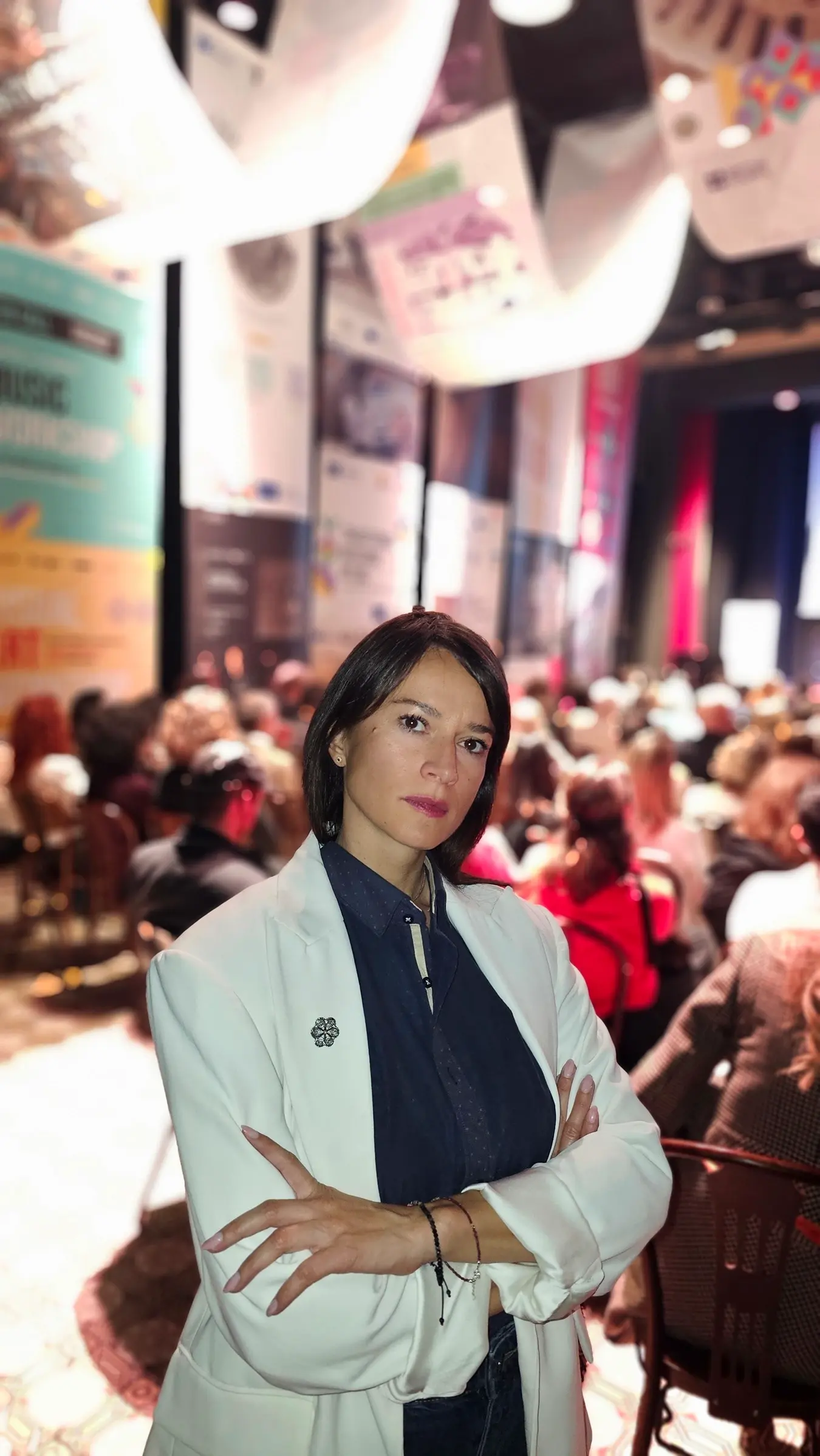
The exhibition was first presented on the ramparts of Kotor, as part of this year's CIM Forum, and received a new spatial setting in Brussels. Instead of walls, it uses hanging structures made of transparent materials, which form partitions while connecting different parts of the interior.
I was interested in how to form a wall that does not close the space, how to create a passage that at the same time becomes part of the exhibition," says Džoganović.
Visitors moving through the installation change perspectives and visual relationships, so the flow of visitors itself became part of the concept. "The exhibition is not static; it re-forms itself with every passage through the space," the artist explains.
For her, space is not merely a place to install a work: it is a collaborator in the process of its creation. That is why, in Brussels, she did not want to impose new content on the architecture, but to find a way for the two to function together.
A Meeting Place at the Heart of Europe
The choice of city gives the exhibition additional weight. "I would like us to see the Western Balkans through this exhibition not as Europe's periphery, but as a space of intense creativity that takes an equal part in shaping its contemporary culture," says Džoganović. In Brussels, according to her, different identities, stories and energies were given a shared space in which they create new relationships without losing their individuality.
For CIM Forum, a regional platform connecting creative industries, media, art and contemporary cultural practices, Brussels is a continuation of its cooperation with UNESCO, the British Council and AICS, which began through joint programme activities in Kotor. The forum also contributed to the panel "Management in Arts", dedicated to the sustainability of cultural projects, the development of creative industries and the possibility of regional and international cooperation growing into long-term partnerships.