

A Quince Among the Books: Why Pages Turn Yellow and Why We Love the Smell of Their Decay

A story about wood, two inventors who never met, and the chemistry that gives away a book's age
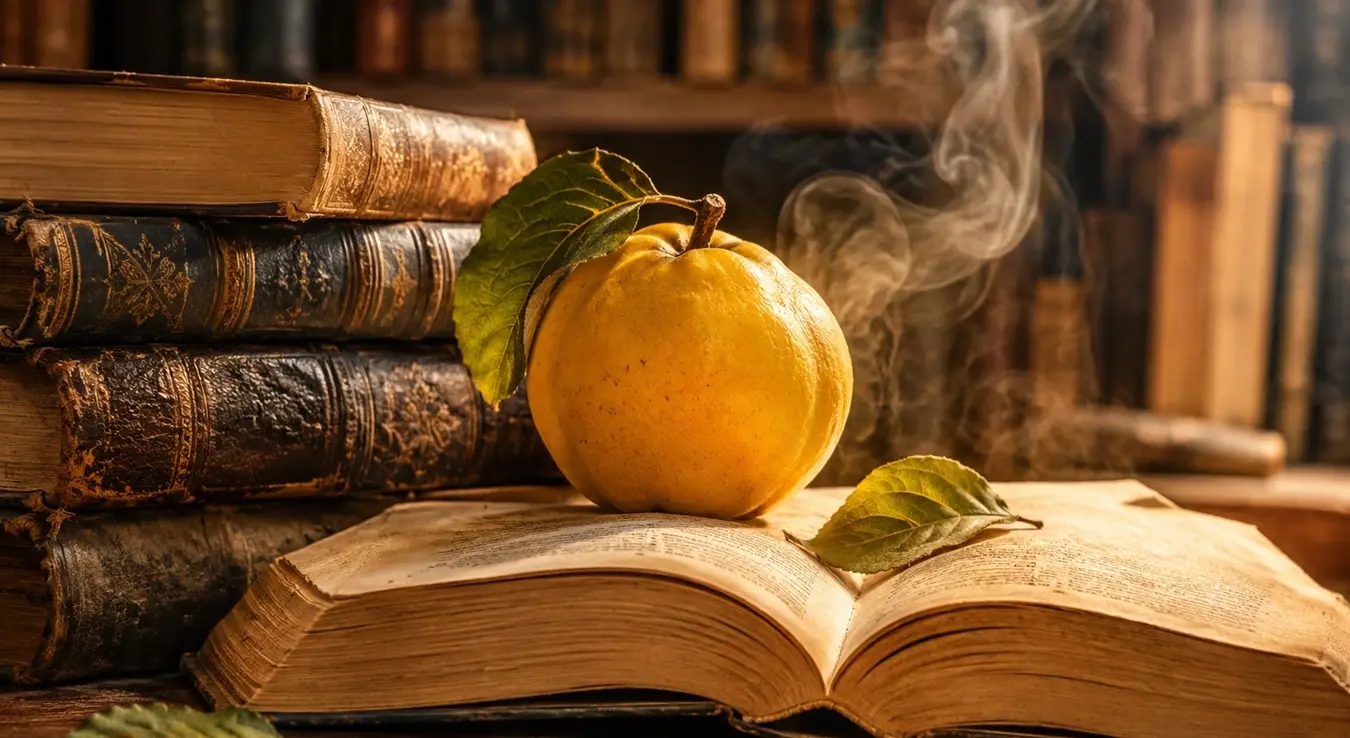
Open a book that no one has touched in thirty years, and you will notice the smell first, and only then the color of the pages. Researchers at University College London described it as a blend of grassy notes, a sour sharpness, a hint of vanilla and an undertone of mustiness. Our language has its own comparison for the color: yellow as a quince.
Both impressions share the same source: wood.
When Paper Was Bedding
Until the middle of the nineteenth century, paper was made almost everywhere from rags: cotton, linen and plant fibers, following a recipe that China invented roughly two thousand years ago. But rags were growing scarce while newspapers were multiplying. The idea that paper could be made from wood is as old as the early eighteenth century, when the French naturalist René-Antoine de Réaumur watched wasps building nests out of wood fibers. Paper from wood pulp was made occasionally even earlier, in England in 1801 (Matthias Koops), but the industrial solution arrived only in the mid-1840s, from two men working independently of each other.
Charles Fenerty (1821–1892), a Canadian inventor and poet from Nova Scotia, took a sample of paper he had made himself from spruce to the Halifax newspaper Acadian Recorder on October 26, 1844, along with a letter written on that very paper. Friedrich Gottlob Keller (1816–1895), a Saxon weaver and mechanic, was working on a machine for grinding wood. The following year, in August 1845, he received a Saxon patent together with the manufacturer Heinrich Voelter, to whom he had sold the idea.
Neither of them got rich. Fenerty never patented his process. Keller could not afford to renew his share of the patent in 1852, so Voelter became the sole holder and continued the business, earning a large profit without Keller. Credit is still divided today: most sources name Keller as the inventor, because he held the patent, while Fenerty, according to Canadian sources, experimented earlier and was the first to announce his discovery publicly.
The Main Culprit Is Called Lignin
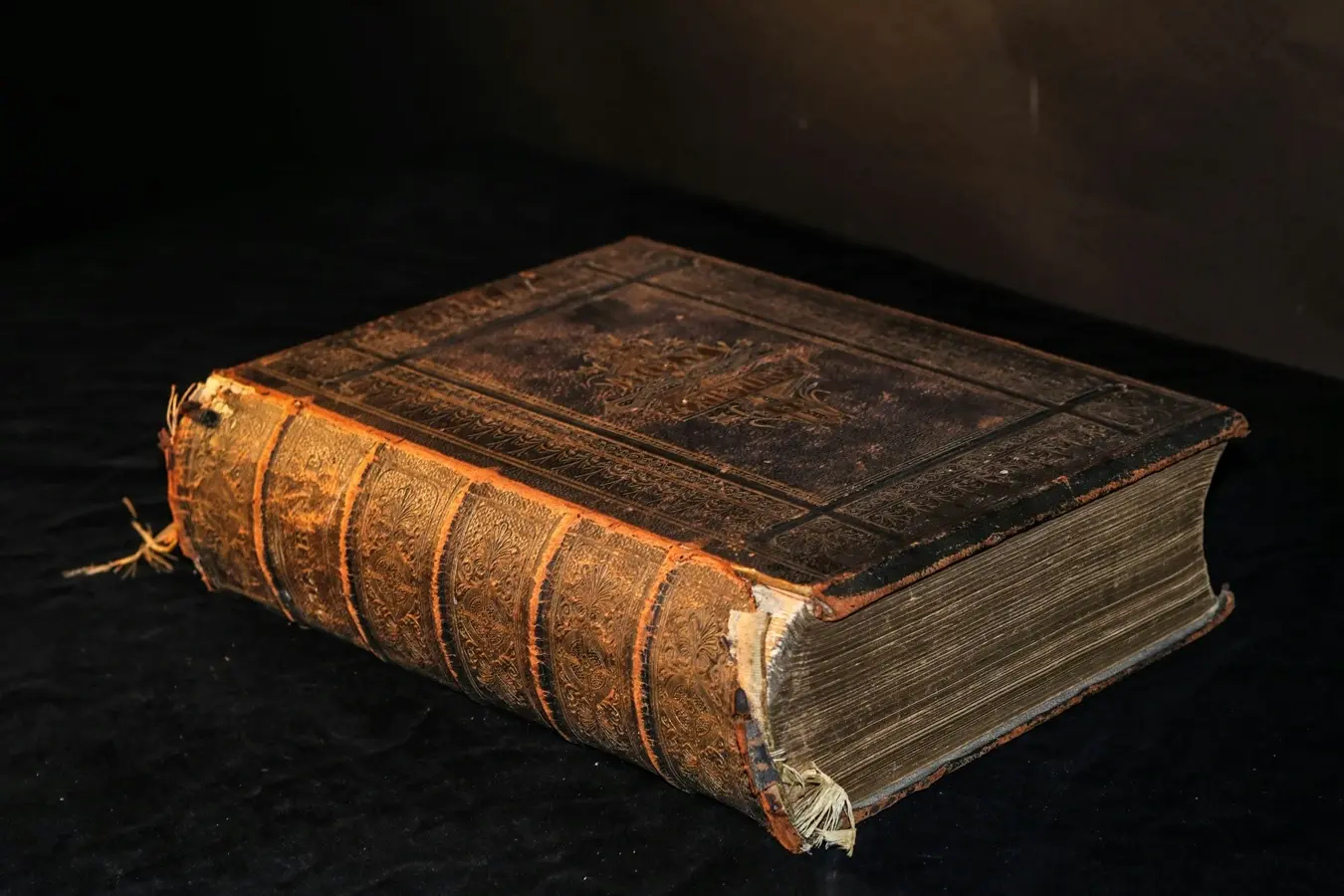
Wood consists mostly of two substances. Cellulose is almost colorless, which is why paper made from it looks white. Lignin is the binder that holds the cellulose fibers together and lets a tree stand upright. It is naturally dark and, more importantly, very sensitive to oxygen and light. Under their influence, it forms compounds that absorb blue and violet light, so the paper reflects yellow and brown, and we see it as yellowed.
That is why newspapers turn yellow within days in the light, while books take decades. Newsprint is made cheaply and quickly, so most of the lignin stays in it. Paper for books is chemically processed and bleached, so less lignin remains. The brown bag from the bakery is not stained: its lignin was left in on purpose. But even paper without lignin is not immune, because cellulose itself oxidizes over time, so even quality books slowly yellow.
Yellowing is not the only problem. The Library of Congress warns that wood-pulp paper from before the 1980s is often acidic, because of the sizing agent used on the paper (alum and rosin), which in the presence of moisture produces sulfuric acid. Yellowing and brittleness are not the same thing, but in practice they often appear together. That is why important books today are printed on acid-free paper with little lignin.
The Smell of Decay
The most interesting part of the story appeared in 2009. Researchers from University College London, led by Matija Strlič, published a paper in the journal Analytical Chemistry describing the smell of old books as a mixture of hundreds of volatile compounds that paper releases as it breaks down. They tested 72 historical papers from the 19th and 20th centuries and singled out about fifteen promising markers for tracking the condition of paper. As lignin breaks down, it yields benzaldehyde and vanillin (hence the vanilla), while cellulose yields furfural. The smell is also shaped by everything the book has lived through: storage, humidity, smoke.
Strlič's group later published, in 2017, an "odour wheel" for old books, with categories such as earthy and musty, sweet and spicy, grassy and woody. It is meant for people without a trained nose too, so conservators use it to translate chemistry into words for laypeople.
The irony is that the smell we love is not the smell of age but the smell of decomposition. Breathing it in, we sense both the life and the death of a book at once.
Why We Love It
Science has no single answer to this, but it does have clues. When visitors to a historic library described the smell of a sample of old paper, the words they most often chose were chocolate and coffee. That is not so strange: vanillin, furfural, and related compounds are also found in cocoa and coffee beans. In other words, part of what we sense in an old book is chemically related to what we love in a cup.
The other part of the answer is memory. Smell is believed to attach itself to memories faster and more strongly than the other senses, and the smell of old books means something pleasant to most of us: a library, silence, school, a cool room in which one reads. So we don't love only the chemistry of decay, but everything it reminds us of.
How to Preserve Them
Conservators' recommendations are boringly simple and, in essence, agree with one another:
- Cool, dry and dark. The Library of Congress recommends room temperature or lower (below roughly 22 °C) and a relative humidity of about 35%, with up to 50% being acceptable. Heat speeds up chemical reactions, while moisture favors mold and the breakdown of alum into acid.
- Stable conditions. A steady temperature and humidity are better than conditions that keep changing. Attics, basements, and garages are the worst places.
- Keep newspaper clippings separate. Acid migrates, so a clipping of old newspaper left between the pages of a book slowly "yellows" the pages around it.
- Handle as little as possible. Paper also weakens from too much use.
And if the yellow color and the smell don't bother you, there is no need to agonize over every stain. A yellowed page is not merely damage: it is a trace of everything the book has been through, from tree to shelf, and that is why the smell of old books is really the smell of their history.