

Cold Water, Hot Claims: What Science Knows About Ice Bathing

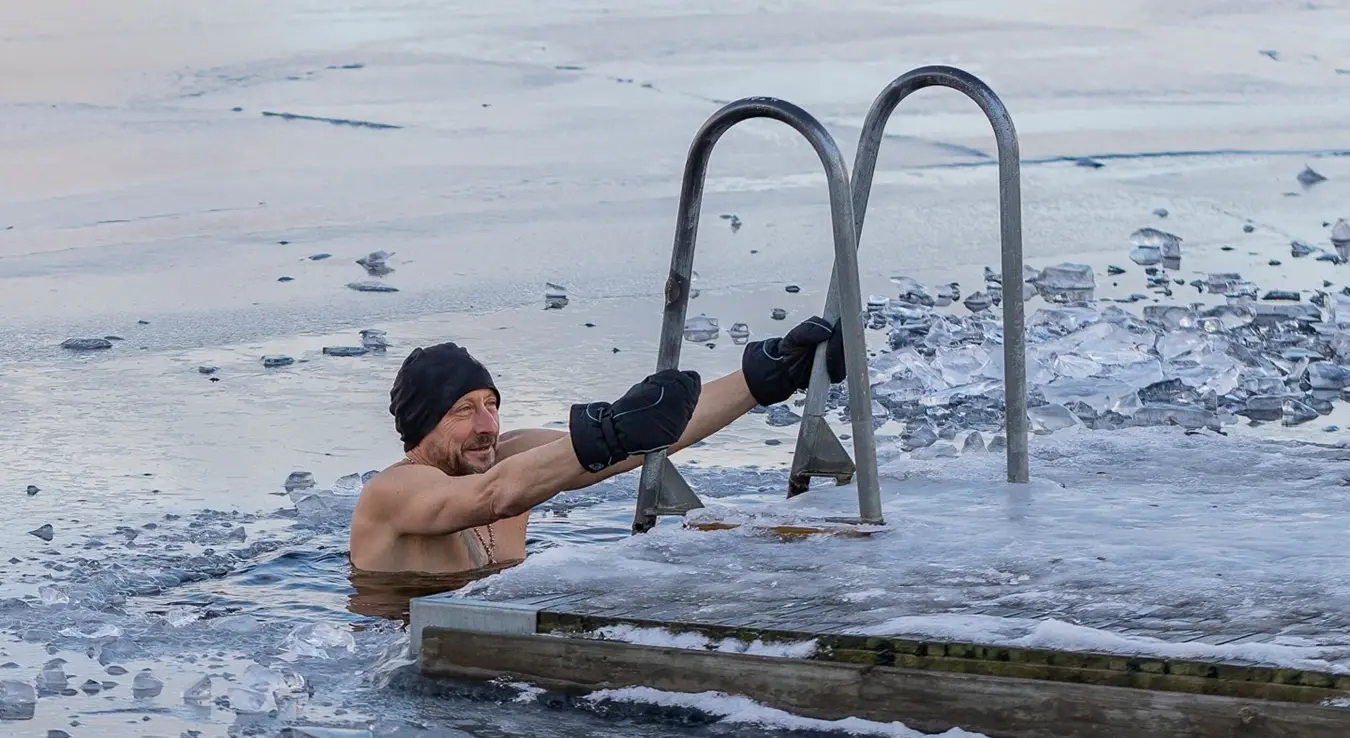
Eleven minutes a week, podcasters say. What do the studies actually show, where does the danger lie, and why are our region's rivers a story of their own?
Eleven minutes a week. That number now appears in podcasts, on packaging, and in cold plunge tub descriptions as a “minimum dose” of cold. In the study it comes from, it was not a recommendation but an average: it was how long seven or eight young Scandinavian men, already years into winter swimming, spent in cold water each week.
How an Average Became a Dose
The study by Susanna Søberg of the University of Copenhagen, published in 2021 in Cell Reports Medicine, compared experienced winter swimmers with eight control participants. The swimmers had a lower thermal set point and produced more heat when cooled, but, to the authors’ surprise, no more active brown fat. The authors themselves stress the limitations: a small sample, men only, and no way to establish causation. The figures of 11 minutes of cold and 57 minutes of sauna described what the swimmers happened to do, not a prescribed dose.
It is a good introduction to the whole story: the science of cold water is, for now, thinner than the story told about it.
What the Pooled Analyses Say
The most comprehensive analysis, published in January 2025 in PLOS ONE (Cain and colleagues, University of South Australia), covered 11 studies with 3,177 participants. Its conclusions are modest: stress was lower, but only for about 12 hours after immersion. Brief cold showers of 20, 60, or 90 seconds brought slightly better quality-of-life scores, but the effect had faded after three months. There was also a temporary rise in inflammatory markers, and “very little evidence” for improvements in mood or immunity. Sleep quality, sickness absence, and overall wellbeing showed some promise.
In September 2026, Berlin’s Charité published a new meta-analysis in Frontiers in Physiology: 13 studies, 4,105 participants. Estimates generally leaned in favor of cold water for depressive symptoms, stress, and mood, but with wide confidence intervals that shrank when only controlled studies were considered. For anxiety, there was no evidence of consistent benefit. Most of the studies had a high risk of bias, and the authors conclude that cold water should not currently be regarded as a standalone treatment for psychiatric disorders.
The authors also make an interesting observation: cold water may work less like a medicine than like a practice in which challenge, mastery, nature, and belonging to a group are intertwined. A recent study they cite found that immersion in the sea improved mood more than immersion in a laboratory.
We can measure and guarantee not much.
The Danger Is Not the Cold, but the First Minute
While the debate is about benefits, the risk is well known, and it is not where most people think. In cold water, people are most often killed not by hypothermia, which takes hours, but by the “cold shock” reaction in the first seconds and minutes. The gasp reflex can be an involuntary breath of two to three liters, followed by hyperventilation lasting one to three minutes. If the head is underwater, the person is drowning. A person can therefore drown while their body temperature is still nearly normal.
Cardiologist Dr. Marko Vuleta, who wrote for N1 in January about swimming for the Holy Cross, adds the cardiac aspect: blood pressure spikes, blood vessels constrict, and in predisposed people arrhythmias can occur. Younger and fitter people tolerate this well, but the risk is higher with hypertension, coronary disease, heart failure, arrhythmias, and in people who are inactive but want to “push through” one day on adrenaline. Among the most common mistakes he lists are entering without preparation, being sleep-deprived, drinking alcohol, and ignoring symptoms.
The good news is that cold shock diminishes with repeated exposure. This is the one adaptation that is well documented, which is why an experienced swimmer has a much easier first minute than a beginner. Swimming once a year without preparation is, Dr. Vuleta says, more a symbolic event than a health benefit.
The Rivers of the Region: January 19
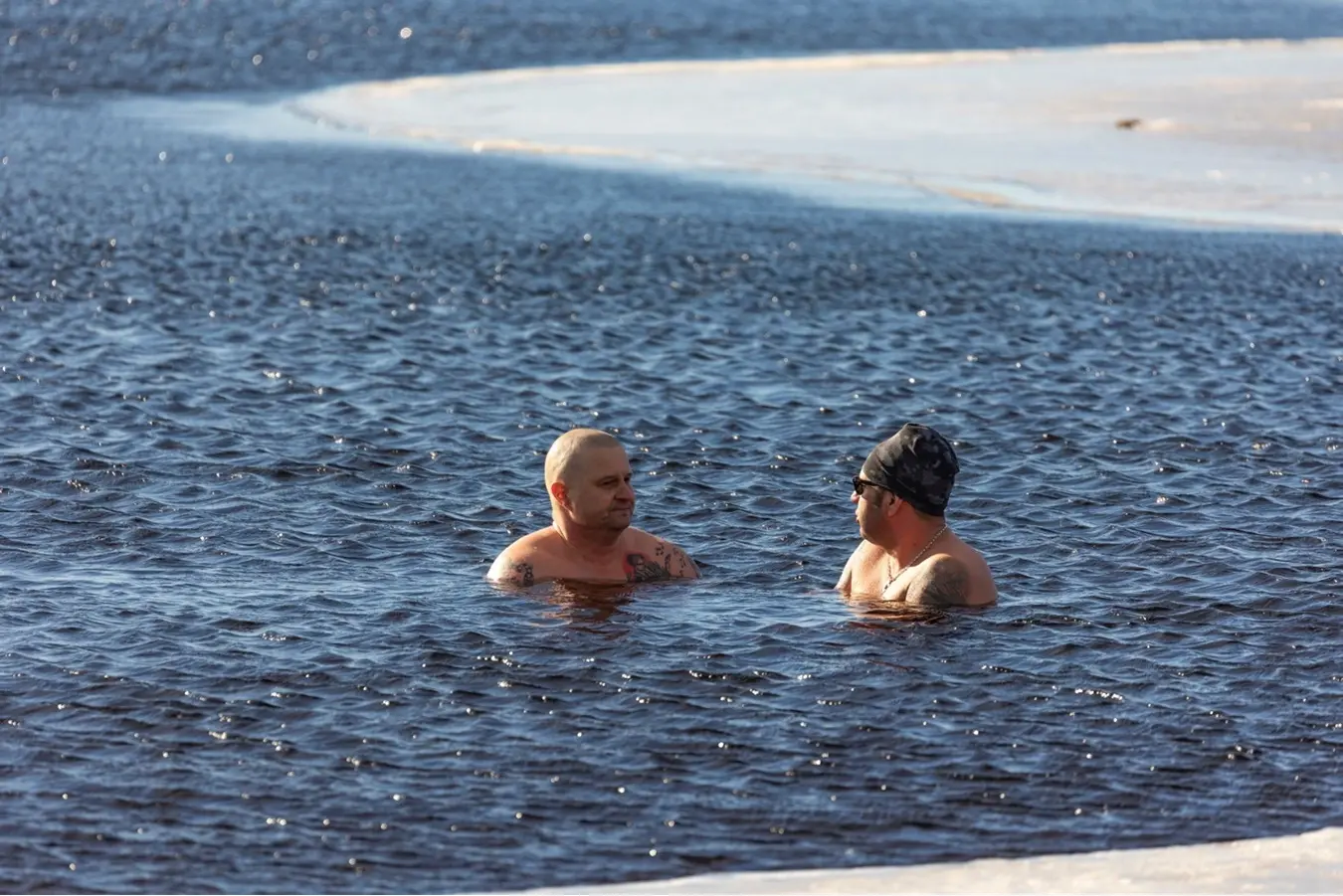
Our version of the cult of ice bathing is as old as the calendar. On Epiphany, January 19, thousands of people in Serbia and Republika Srpska jump into rivers and lakes to swim for the Holy Cross. In Banja Luka, the procession walks to the Patra bridge near the Kastel fortress, where the cross is lowered into the Vrbas and the bravest swim after it. In Prijedor, people jump into the Sana, whose temperature is just above zero; in Pirot one year the water was four degrees with the air at minus four; and in Zemun on one occasion 242 people swam with the Danube at around one degree.
The tradition is organized in a way that health experts treat as a precondition: the swim is short (a symbolic 33 meters, for the years of Christ’s life), and volunteers, police, and divers are on the shore. As Dr. Vuleta writes, an organized event with a medical team is incomparably safer than swimming alone.
That contrast is the point. Ice bathing as part of a ritual with divers and medical help is not the same as going alone to a river in February, because a river is not a pool: current, depth, and temperature change, and help is not within reach. The advice is the same as in the medical sources: never alone, keep it short, no alcohol, and on getting out, dry clothes, a hat, and a warm drink immediately.
What Remains
Cold water probably does not do what it is sold as doing, but it does something else: it teaches us not to panic in the first sixty seconds. That is the one adaptation science documents well, and the one that cannot be skipped.
The cult of ice bathing does not rest on evidence but on experience: challenge, community, the feeling of having survived something. That is nothing. We just should not confuse a feeling with a dose.